
Value Chain Operations Excellence & Continuous Improvement with a People, Process, Technology & Culture Framework Uplifts EBIT
Operational excellence can be summarised as the ability to execute business operations more efficiently and effectively than competition, resulting in happy customers, collaborative suppliers, higher revenue, lower operational risk, reduced operating expenses, streamlined business processes, and better triple bottom line performance for all stakeholders.
Six Sigma
Six Sigma consists of a collection of tools that can be used to improve business processes and produce a higher-quality, defect-free, faster outcome. Six Sigma aims to improve the customer experience by identifying and eliminating variation. More than 50 percent of Fortune 500 companies have adopted Six Sigma in some way.
Six Sigma has saved Fortune 500 companies $427 billion in the last 20 years, according to a research by author Michael Marx on the iSixSigma website published on January 11, 2007.
A business process performing at a Six Sigma level will not produce more than 3.4 defects per million opportunities. Any failure to meet customer expectations is a defect.
LEAN
LEAN is about eliminating waste from a production process. The LEAN way-of-working advocates that a company should only focus on the value that it adds to its customers/business.
LEAN also teaches us that every end-to-end process has a bottleneck and that focusing our efforts on optimizing that bottleneck will lead to the fastest path to success.
LEAN’s key principles focus on minimizing non-value-added processes, thus increasing the throughput and quality of products/services while eliminating unnecessary costs/lead-times.
Kaizen
Kaizen is “continuous improvement” in Japanese. It is used to make positive, ongoing changes at work. Kaizen’s guiding principles are that a positive process will result in positive results, that teamwork is essential to success, that every process can be continuously improved, and that there are no limits to the improvements that can be realized.
Industry 4.0 Approach
“Industry 4.0 builds on the previous three phases of industrialization – mechanization, mass production, and controls. It’s an intelligent production environment enabled by an integrated platform of enterprise data systems, the Internet of things (IoT) and cloud computing”, according to Forbes. Industry 4.0 gives us valuable insights into variables that cause performance dips, machinery malfunctions, and bottlenecks by improving the current operating model. I4.0 is more than just efficiency. It gives manufacturers the power to customize products quickly by leveraging the latest technologies, leading to greater customer satisfaction and higher customer retention/loyalty.
The above content has been taken from author Vamsi Krishna’s amazing article “Industry 4.0” published on the Stanford University website on August 3, 2018.
Augmented Reality & Virtual Reality
AR and VR technologies offer immersive experiences that enhance training, design, and maintenance processes in industrial settings.
AR overlays digital information onto the physical world, providing workers with real-time instructions and data visualization. VR creates simulated environments that enable users to interact with virtual objects and scenarios, facilitating training and prototyping activities.
Artificial Intelligence
AI algorithms analyse vast amounts of data to identify patterns, anomalies, scenarios, and then prescribe actions to capitalize on opportunities for improvement. AI & ML powers prescriptive analytics, predictive maintenance, quality control, and operations optimization in Industry 4.0.
Blockchain
Blockchain technology ensures the security and transparency of transactions and data exchanges within the industrial ecosystem using an immutable ledger, enhancing trust and traceability across supply chains and one common source of truth amongst all end-to-end value chain partners.
Robotics
Robotics plays an instrumental role in automating tasks traditionally only performed by humans, leading to increased efficiency, precision, and speed in manufacturing operations. Robots don’t necessarily need to replace human workers – rather, robots can be a great support and value-add to human workers by efficiently taking on tasks that are repetitive, stressful, hazardous, etc.
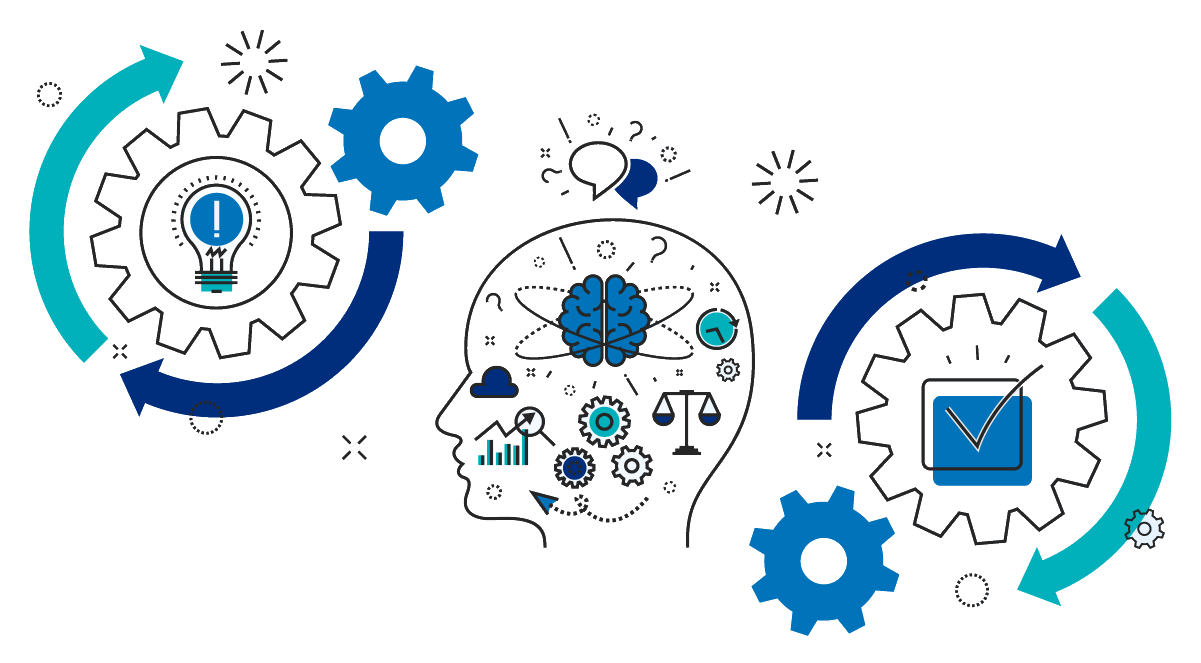
Organizational Design & Operation Systems
People, Process, Technology & Culture
In today’s ever-evolving business environment, an organization’s success is often attributed to the seamless integration of four key elements: People, Process, Technology, and Culture. These components form the foundation upon which organizations thrive, enabling them to adapt, innovate and outperform competitors in their respective industries.
This principle was widely demonstrated in Toyota’s business operations. The automobile company’s operating system – Toyota Production System (TPS) – strived to eliminate all waste in pursuit of the most efficient work methods. And how did they do this? Toyota integrated the expertise and creativity of its workforce (People) with efficient production methods (Process), strategic utilization of innovation (Technology) and a high regard for business values (Culture). This unorthodox operating system helped the Japanese giant to make the world’s best quality automobiles at the lowest cost while developing new products quickly.

People
Toyota has mastered a “soft” innovation that relates to corporate culture. The company succeeds because it creates contradictions and paradoxes in many aspects of organizational life. Employees have to operate in a culture where they constantly grapple with challenges and problems and must come up with fresh ideas.
That’s why Toyota constantly gets better. The hard and the soft innovations work in tandem. Like two wheels on a shaft that bear equal weight, together they move the company forward.
Toyota’s culture of contradictions plays as important a role in its success as TPS does, but rivals and experts have so far overlooked it. Toyota believes that efficiency alone cannot guarantee success.
Make no mistake: No company practices Taylorism better than Toyota does. What’s different is that the company views employees not just as pairs of hands but as knowledge workers who accumulate chie—the wisdom of experience—on the company’s front lines. Toyota therefore invests heavily in people and organizational capabilities, and it garners ideas from everyone and everywhere: the shop floor, the office, the field, the suppliers, the customers, etc.

Process
Toyota has found that a practical way to achieve the impossible is to think deeply but take small steps—and never give up. It first breaks down a big goal into manageable challenges. Then it experiments to come up with new initiatives and processes for handling the more difficult components of each challenge.
This pragmatic approach to innovation yields numerous learning opportunities. Toyota organizes experiments using strict routines, as is widely known. It has refined Plan-Do-Check-Act (PDCA), the continuous-improvement process used throughout the business world, into the Toyota Business Practices (TBP) process.
The eight-step TBP lays out a path for employees to challenge the status quo: clarify the problem; break down the problem; set a target; analyze the root cause; develop countermeasures; see countermeasures through; monitor both results and processes; and standardize successful processes. When Toyota evaluates managers, it usually emphasizes process performance and learning over results.
The company looks at how managers achieved their goals; how they handled issues; how they fostered organizational skills; and how they developed, motivated, and empowered people.

Technology
By setting near-unattainable goals, Toyota’s senior executives push the company to break free from established routines. This practice goes back to Toyota’s genesis. In 1937, the founder, Kiichiro Toyoda, wanted to produce automobiles in Japan without using foreign technology. It seemed like an impossible goal; even mighty zaibatsu such as Mitsubishi and Mitsui had decided against entering the automobile industry at that stage because of the investments they would have to make.
Toyoda dared to—and the rest is history. Toyota doesn’t modify its automobiles to local needs; it customizes both products and operations to the level of consumer sophistication in each country. This strategy pushes Toyota out of Japan, where it is dominant, and into overseas markets, where it has often been the underdog.
Following the strategy increases operational complexity, but it maximizes employees’ creativity since they have to develop new technologies, new ways of marketing, and new supply chains. Nissan and Honda follow the same strategy, but less rigorously: In 2006, Toyota offered 94 models in Japan—almost three times as many as Nissan’s 35 and Honda’s 30 models.
Pursuing local customization also exposes Toyota to the sophistication of local tastes. For instance, when it introduced the subcompact Yaris in 1999, Toyota had to offer advanced technology, greater safety, roomier interiors, and better fuel efficiency to live up to European customers’ expectations.

Culture
People often ask, “Tell me one thing I should learn from Toyota.” That misses the point. Emulating Toyota isn’t about copying any one practice; it’s about creating a culture.
That takes time. It requires resources. And it isn’t easy. First, companies have no choice but to embrace contradictions as a way of life. Most enterprises stop growing because they stick to processes and practices their past successes have generated. However, old methods also lead to institutional rigidities.
Companies can overcome them by trying to reach new markets or by tackling fresh challenges. Second, companies must develop routines to resolve contradictions. Toyota uses numerous tools such as the Plan-Do-Check-Act model, the eight-step Toyota Business Practices process, the A3 reporting system, and the widely known ask-why-five-times routine.
Unless companies teach employees how to deal with problems rigorously and systematically, they won’t be able to harness the power of contradictions. Third, companies must encourage employees to voice contrary opinions. Top management must be open to criticism and hearing opposing viewpoints if they want new ideas. Should companies try to do as Toyota does? We believe they should.
Toyota’s culture of contradictions places humans, not machines, at the center of the company. As such, the company will be imperfect, and there will always be room for improvement. In that sense, Toyota’s model mirrors human creativity. Can you say the same about your company?
Manufacturing Operations Excellence & Turnaround
Lean Six Sigma
Lean Six Sigma is a powerful methodology widely employed in the business world to enhance efficiency, reduce waste, and improve overall quality. At its core, Lean focuses on eliminating waste and optimizing processes to enhance efficiency and value delivery, while Six Sigma aims to reduce defects and variability through rigorous root-cause analysis and statistical data methods.
By combining these two approaches, organizations can achieve exponential improvements in performance, quality, and customer satisfaction. Before we go any further, let us understand in depth how ‘Lean’ and ‘Six Sigma’ actually work.
What is Lean Manufacturing?
Lean, originally developed by Toyota in the 1950s, emphasizes the importance of delivering value to customers while minimizing waste.
It identifies eight types of waste, known as “muda,” including overproduction, waiting, unnecessary transportation, excess inventory, motion, defects, over-processing, and underutilized talent.
Lean principles advocate for continuous improvement, employee empowerment, and a relentless focus on customer needs, driving organizations to streamline processes, optimize resource utilization, and enhance overall productivity.
What is Lean Manufacturing?
Lean, originally developed by Toyota in the 1950s, emphasizes the importance of delivering value to customers while minimizing waste.
It identifies eight types of waste, known as "muda," including overproduction, waiting, unnecessary transportation, excess inventory, motion, defects, over-processing, and underutilized talent.
Lean principles advocate for continuous improvement, employee empowerment, and a relentless focus on customer needs, driving organizations to streamline processes, optimize resource utilization, and enhance overall productivity.
Six Sigma Method
Six Sigma, developed by Motorola in the 1980s and popularized by General Electric, is a data-driven approach to process improvement aimed at reducing variation and defects. The central concept of Six Sigma revolves around achieving near-perfect quality by statistically analyzing processes, eliminating root causes of defects, and implementing solutions to minimize variability. Through the rigorous application of statistical tools and methodologies, Six Sigma organizations strive to achieve process excellence and deliver consistent, high-quality products and services. Six Sigma quality is achieved when long-term defect levels are below 3.4 defects per million opportunities (DPMO).
The Lean Six Sigma methodology employs a structured approach known as DMAIC which stands for Define, Measure, Analyze, Improve, and Control to improve any existing process/product/service, and DMADV which stands for Define, Measure, Analyze, Design, and Verify to create any new process/product/service. These methods guide businesses through a systematic approach to address complex issues efficiently and effectively.
DMAIC
01Define
A team, led by a Lean Six Sigma expert, selects a specific process/product/service and defines the problem it aims to resolve
02Measure
The team establishes the current performance of the process/product/service using metrics, establishing a baseline of the as-is, and identifies potential factors that could be impacting its performance.
03Analyze
Subsequently, the team conducts a thorough analysis of the process/product/service, examining each potential factor that could contribute to any issues and testing them to identify the root cause of the problem(s).
04Improve
Based on the analyses, the team implements changes aimed at enhancing the performance of the system and reaching the desired to-be state for the process/product/service.
05Control
Finally, the team implements controls to ensure that the process maintains its improved performance and does not regress to previous sub-optimal conditions.
DMADV
01Define
A team, led by a Lean Six Sigma expert, defines the new process/product/service that it is aiming to create and the goals/objectives it is trying to accomplish through this new creation
02Measure
The team establishes the metrics linked to the relevant goals/objectives, on the basis of which the performance of the new process/product/service will be measured.
03Analyze
Do some research and development (R&D) to come up with options; evaluate the pros/cons of each option using a consistent methodology.
04Design
Leverage the shortlisted option to design and create the new process/product/service; pilot test its performance in controlled environments.
05Verify
After the new process/product/service has been fully established, verify if it’s real performance on metrics is satisfactory, and if it successfully meets/exceeds all the goals/objectives. (If not, then repeat the relevant steps and continuously improve until the desired outcome is achieved.)
Integration of Lean + Six Sigma to Drive Business Process Reengineering & Sustainable Enterprise Success
Lean Six Sigma combines the complementary strengths of Lean and Six Sigma methodologies to create a comprehensive approach to process improvement. While Lean focuses on eliminating waste and enhancing flow, Six Sigma provides the analytical tools and techniques necessary for reducing defects and improving process capability. By integrating these two methodologies, organizations can achieve significant improvements in efficiency, effectiveness, quality, speed, and customer satisfaction.
The adoption of Lean Six Sigma offers numerous benefits to organizations across various industries. By eliminating waste, reducing defects, and optimizing processes, companies can realize cost savings, increase productivity, reduce process times, and enhance competitiveness in the market. Moreover, Lean Six Sigma fosters a culture of continuous improvement, empowering employees to identify and address issues proactively, driving ownership, innovation, and sustainable enterprise growth.
Here are a few examples of renowned companies that successfully use Lean Six Sigma to continually drive their business to new heights:
General Electric
In the late 1980s, General Electric turned their focus towards ensuring excellent quality. They began their Six Sigma implementation through a strong emphasis on the importance of training. By training their employees in data-based problem analysis, they overcame many obstacles for which they had previously been unprepared. All GE employees were required to take a training program in using Six Sigma methodologies in the workplace. The course lasted for thirteen days or 100 hours and required them to complete a Six Sigma project before the year 1999. Their training covered a variety of areas, including how to use DMAIC.
- Six Sigma Mentoring
Mentoring was another important aspect of General Electric’s Six Sigma training and implementation. They would hire full-time Six Sigma Master Black Belts (MBB) to help implement Six Sigma, driving process changes, as well as training other staff. Each MBB mentored employees involved with GE’s core processes for Black Belt level training. This involved a four-month training program in which they learned to apply Six Sigma techniques in their work, while mentored by their MBBs. This dedication to training and mentoring allowed GE to quickly generate a team of full-time Black Belts to implement improvement projects.
- The Result
By revolutionizing their corporate culture, enhancing product quality, and trimming production costs, General Electric reaped substantial rewards from implementing the Six Sigma methodology. By 1997, the company garnered close to $700 million in corporate benefits, a figure that soared to over $2.5 billion by 2000. The improvement in product reliability and production efficiency bolstered customer relations, consequently boosting revenue generation.
3M
3M is one the world’s top innovative technology companies that strives to create groundbreaking products. The goal of 3M is simple – create products that make positive differences in everyone’s lives. Gaining control of 3M in 2001, James McNerney placed the Six Sigma methodology into the backbone of the company.
- Implementing Six Sigma
McNerney’s unique, considerate approach led to a four-year overhaul of 3M’s manufacturing and production processes. From eliminating waste to improving productivity, this methodology grew revenue faster than ever and continues to lead innovative technologies. McNerney grew 3M’s enterprises such as Global Sourcing, 3M Acceleration, eProductivity, and Indirect Cost Control. As a result, 3M began 2005 with over 30,000 employees Six Sigma certified, with a minimum Green Belt training for all technical and sales staff. Combining the Six Sigma methodology with strong leadership, 3M consistently achieves a continuously improving production process with increasing profits to match. - The Result
Alongside considerable financial growth, 3M enjoys significant corporate network growth. 3M’s network continues to expand by collaborating with numerous companies on over 250 projects such as Ford, Estee Lauder, Motorola, Wal-Mart, and Procter & Gamble. Mature, effective Six Sigma programs are easily spotted, sharing their knowledge with customers, suppliers, and other important stakeholders. Only Six Sigma has the tools necessary to transform your business, with total process improvements while reducing defects. Six Sigma drives growth, reduces costs, increases revenue, and produces strong business relationships with customers that last a lifetime.
The success stories of companies like General Electric and 3M underscore the positive transformative impact of Lean Six Sigma on organizational performance and profitability. Through a relentless focus on identifying and eliminating inefficiencies, reducing defects, and optimizing workflows, businesses have realized significant cost savings, improved productivity, and enhanced triple bottom line results.

Supply Chain Management Technologies & Digital Transformation
Supply Chain Management
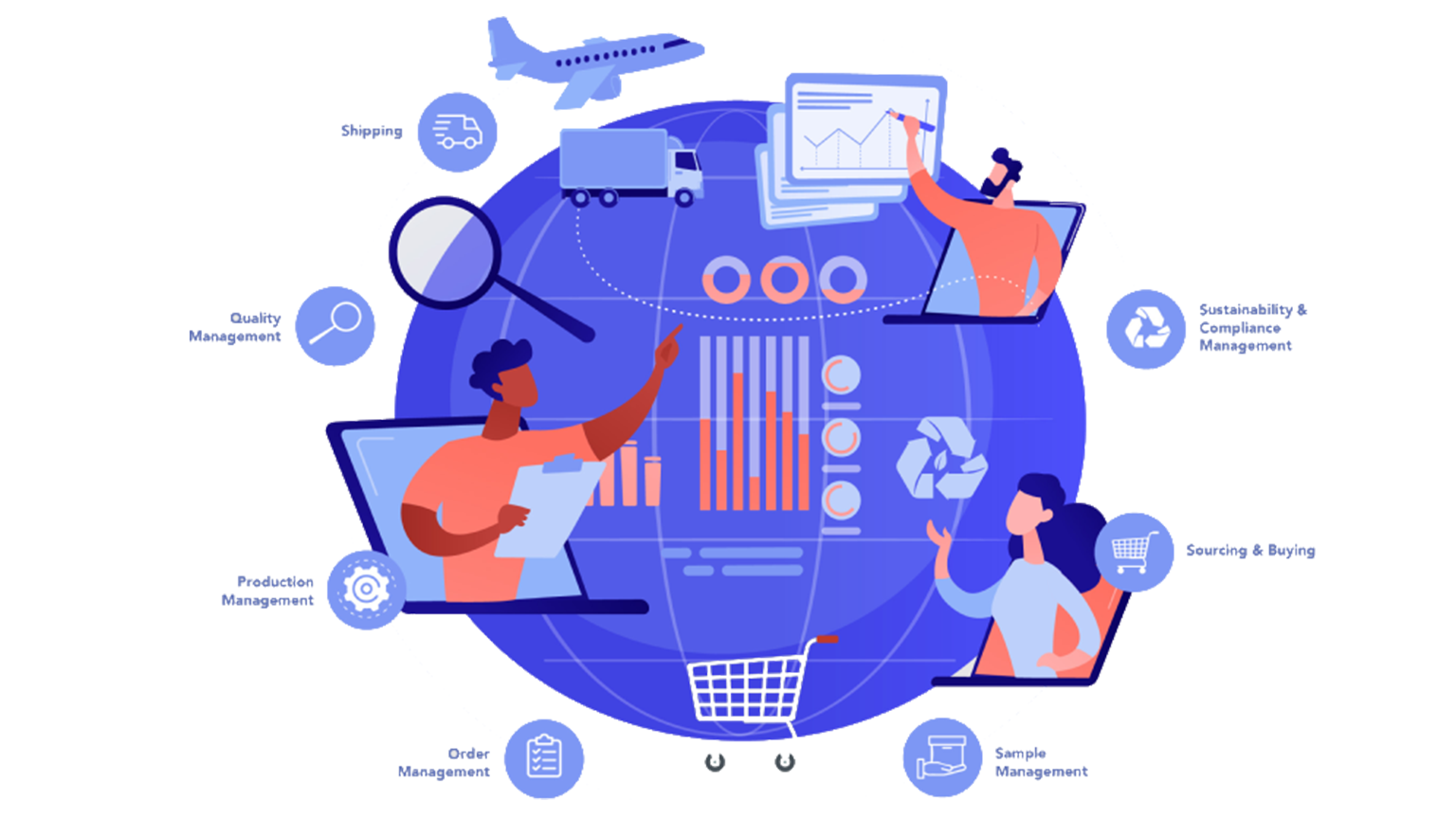
Supply chain management is the strategic coordination of processes involved in the production and distribution of goods and services. It encompasses planning, sourcing, manufacturing, logistics, and delivery, with the goal of optimizing efficiency and minimizing costs while meeting customer demands. Effective supply chain management ensures the seamless flow of materials, information, and finances between suppliers and customers, driving competitive advantage and customer satisfaction. In today’s globalized economy, businesses rely on robust supply chain strategies to navigate complexities, mitigate risks, and capitalize on opportunities for growth and innovation.
Digital, Connected, & Agile Supply Chains
Digital Technologies
Digital supply chain management integrates advanced technologies and data analytics into traditional supply chain processes, revolutionizing how businesses manage their operations.
By leveraging technologies such as IoT, GPS, AI, blockchain, and big data analytics, digital supply chain management enables real-time visibility, predictive/prescriptive insights, and automation across the entire supply chain. This proactive approach enhances agility, efficiency, and responsiveness to customer demands while reducing costs and risks. In the digital era, businesses that embrace digital supply chain management gain a competitive edge by optimizing processes, accelerating innovation, and delivering superior customer experiences in dynamic and interconnected global markets.
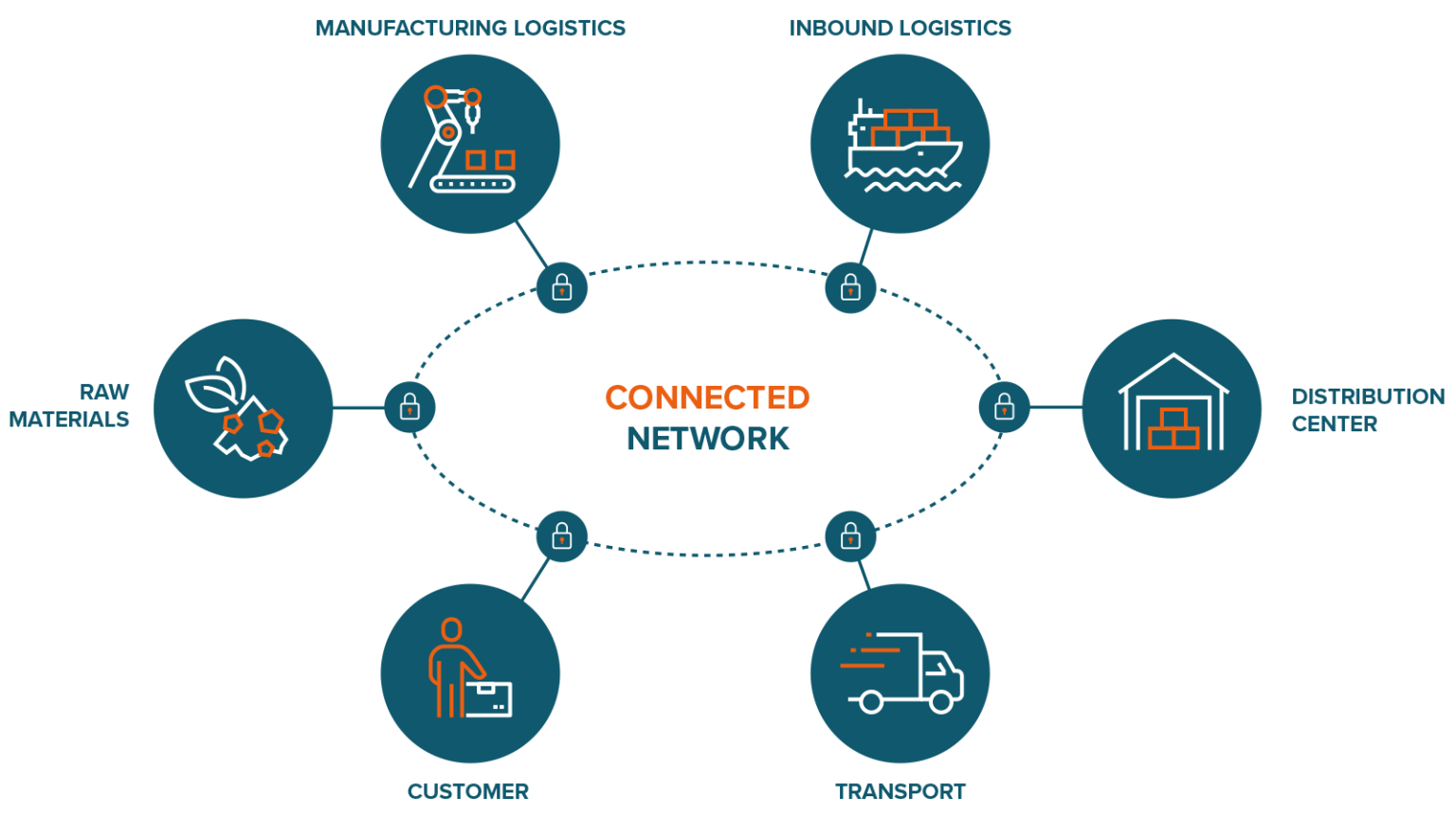
Connected
A connected supply chain is a modern approach to supply chain management that emphasizes seamless integration and collaboration among all stakeholders, from suppliers to customers. Leveraging advanced technologies such as the Internet of Things (IoT), cloud computing, and data analytics, a connected supply chain enables real-time visibility, communication, and data sharing across the entire supply chain network. This interconnectedness allows for faster decision-making, proactive risk management, and improved responsiveness to customer needs. By breaking down silos and fostering collaboration, a connected supply chain drives efficiency, agility, and innovation, empowering businesses to thrive in today's rapidly changing and interconnected global economy.

Agile
An agile supply chain is a dynamic and flexible approach to supply chain management designed to quickly respond to changes in customer demand, market conditions, and other external factors. Unlike traditional supply chains which are often rigid, inflexible, and linear, an agile supply chain prioritizes adaptability, resilience, and responsiveness. By leveraging real-time data, advanced analytics, global networks, and collaborative relationships with suppliers and partners, an agile supply chain can swiftly adjust production schedules, inventory levels, and distribution channels to meet evolving customer needs at the right places, in the right quantities, within the time constraints at optimized costs. This proactive approach enables businesses to minimize disruptions, reduce costs, and maintain a competitive edge in today's fast-paced and unpredictable business environment.

Faster & Better Decision-Making
In today’s rapidly evolving business landscape, the ability to make fast and informed decisions is crucial for end-to-end supply chain success. A supply chain that prioritizes fast and better decision-making leverages real-time data, advanced analytics, and collaborative platforms to enable swift and insightful actions across the entire value chain.
By harnessing technologies such as artificial intelligence, machine learning, and predictive analytics, businesses can gain valuable insights into demand patterns, inventory levels, and market trends, empowering them to make data-driven decisions quickly and effectively.
This proactive approach not only enhances operational efficiency and agility but also enables businesses to anticipate challenges, mitigate risks, and capitalize on opportunities for growth and innovation. In a fast-paced and competitive business environment, a supply chain team that excels at faster and better decision-making is essential for staying ahead of the curve while delivering superior value to customers.
Case Study
Amazon’s Supply Chain Management
Six Sigma has been a firm approach in Amazon’s business culture. With more than 2000 items ordered every sixty seconds, Amazon can’t afford to let standards slip. As far back as 1999, the company began their Operational Excellence program aimed at improving company processes. Amazon defines Operational Excellence in two ways.
- First: To deliver continuous improvement for customer experience.
- Second: To drive productivity, margin, efficiency, and asset velocity across the entire corporation.
To make the Six Sigma process gel further, Amazon has adopted several Six Sigma concepts, including recruiting the finest thought leaders from top schools. Since the methodology is as important as the one who is driving it, it is of utmost necessity the talent hired knows what they are doing.
Amazon has always been researching, innovating, and implementing bold supply chain strategies. In 2004, Amazon’s annual revenue was just under $7 billion. According to Statista, by 2018, its annual revenue reached almost $233 billion. And more recently, in the 12 months ending in June 2024, Amazon’s revenues crossed $600 billion.
Amazon is the fastest company to reach $100 billion in sales revenue, taking only 20 years. From its inception, Amazon has mostly grown ~20% or more per year.
The major contributor to this rapid business success for Amazon is none other than efficient supply chain management using Lean Six Sigma combined with advanced information technology, extensive warehouse network, multitier inventory management, and excellent transportation management and facilities.

Sustainability & ESG Integrated Value Chain Operating Model
Sustainability & ESG
Sustainability and Environmental, Social, and Governance (ESG) considerations have become increasingly integral to modern business practices, reflecting a growing recognition of the interconnectedness between business operations and broader societal and environmental impacts. Sustainability encompasses initiatives aimed at minimizing negative environmental impacts, promoting social responsibility, and ensuring long-term economic viability. On the other hand, ESG factors more comprehensively refer to a set of criteria/metrics used by investors and stakeholders to evaluate a company’s environmental, social, and governance practices. Together, sustainability and ESG principles guide businesses towards responsible and ethical decision-making, driving positive outcomes for both the company and society at large visible through the triple bottom line. In an era of heightened awareness of climate change, social inequality, and corporate accountability, integrating sustainability and ESG considerations into responsible business strategies has become imperative for organizations seeking to build resilience, while mitigating risks and fostering sustainable growth.
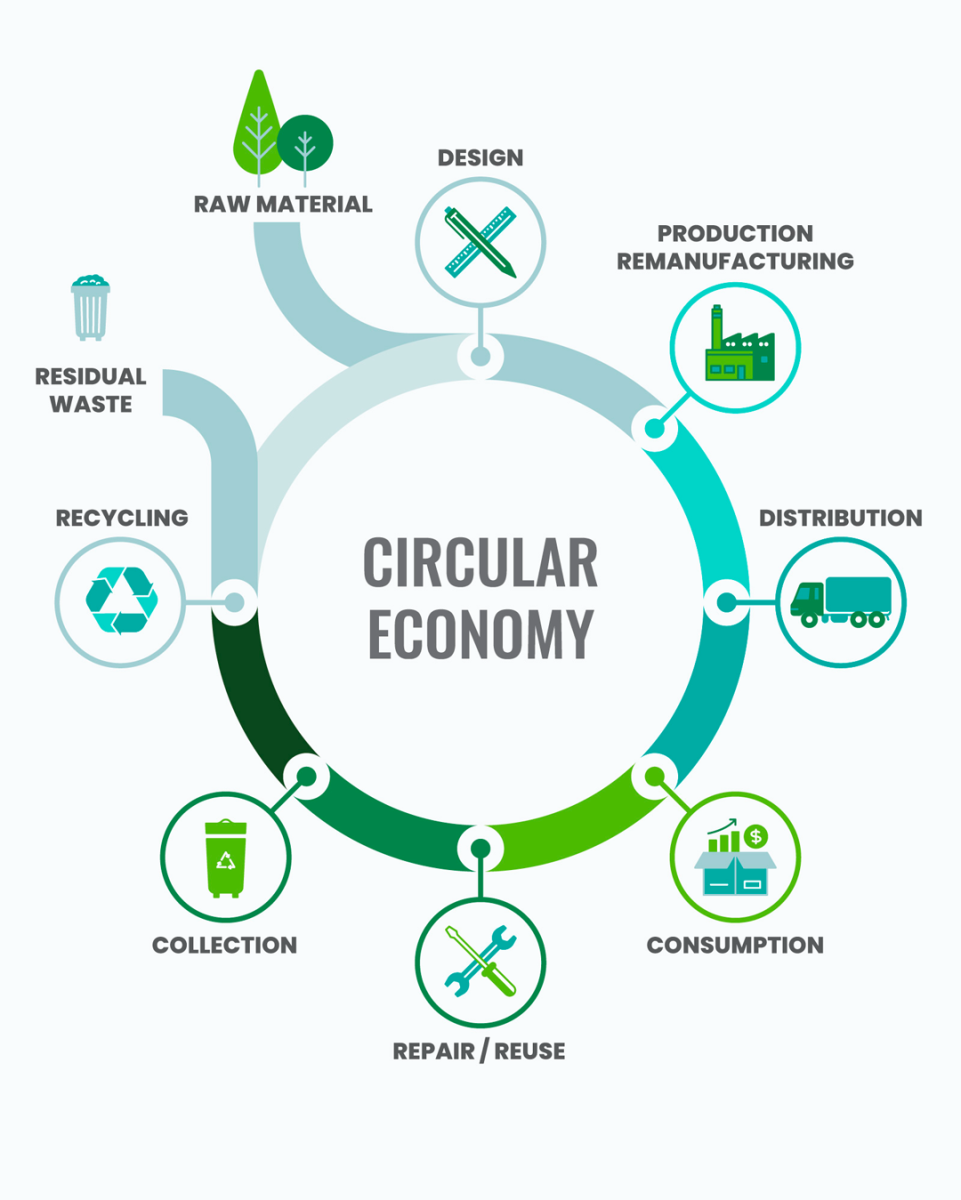
Operations Decarbonization
Operations decarbonization refers to the process of reducing greenhouse gas (GHG) emissions and transitioning to more sustainable and environmentally friendly practices within industrial and supporting business operations.
This involves implementing strategies to minimize the CO2e footprint associated with manufacturing processes, energy consumption, transportation, and waste management. By adopting renewable energy sources, improving energy efficiency, optimizing transportation logistics, rationalizing global operational footprints, and implementing sustainable practices like circularity throughout the supply chain, companies can mitigate their impact on the environment and contribute to global efforts to combat climate change.
Case Study
IKEA
A compelling case study demonstrating operations decarbonization is IKEA, the Swedish multinational furniture retailer. IKEA has committed to becoming climate positive by 2030, meaning that it aims to reduce more greenhouse gas emissions than it emits across its entire value chain. To achieve this ambitious goal, IKEA has implemented various initiatives to decarbonize its operations:
For transport and logistics, our goals are to reduce the carbon footprint from every transport we do by an average of 70% and by 80% in absolute terms from our logistics operations. By 2040 we aim to transport our goods on zero emissions trucks and vessels.
Our ambitious decarbonise agenda guides us throughout this journey. We are committed to reducing, replacing, and rethinking the ways we supply our products to reduce greenhouse gas emissions. We work with a diversified portfolio of initiatives and solutions, short- and long-term simultaneously with the same sense of urgency.
Reduce is about increasing efficiencies in everything we do. We work together with our service providers to reduce fuel and energy consumption, increase equipment utilisation, and optimise our transport network.
Replace is about replacing fossil fuels. We are switching to intermodal solutions, increasing the use of more sustainable/zero emission fuels and renewable energy, and striving for electrification of freight fleets.
Rethink is about integrating innovations and new technologies into our value chain. We are rethinking everything by being open to new ideas, thinking outside the box, and collaborating with others to drive innovation.

Net Zero Roadmap
A net-zero roadmap outlines a strategic plan for achieving net-zero GHG/CO2e emissions, where the amount of greenhouse gases emitted is balanced by the amount removed from the atmosphere.
It involves setting clear targets along the way, defining actionable steps, and implementing measures to reduce emissions across all aspects of an organization’s operations.
The roadmap typically includes initiatives to improve energy efficiency, rationalize global operational footprints, embed circularity, transition to renewable energy sources, optimize transportation and logistics, invest in carbon capture and storage technologies, and engage relevant stakeholders in the journey towards carbon neutrality.
Case Study
Microsoft
Microsoft will be carbon negative by 2030. By 2050, Microsoft will remove from the environment all the carbon the company has emitted either directly or by electrical consumption since it was founded in 1975.
Microsoft’s carbon negative commitment is part of a long history of ambitious targets and actions to reduce GHG emissions. In 2009, Microsoft set its first GHG emissions target: a 30% reduction from 2007 levels by 2012. Microsoft has operated carbon neutral since 2012. Historically, Microsoft focused on Scope 1 emissions (direct emissions from owned or controlled sources) and Scope 2 emissions (indirect emissions from the generation of purchased electricity, steam, heating and cooling consumed by the company). Scope 3 includes all other indirect emissions that occur in a company’s value chain. That’s why the company is now committing to becoming carbon negative in 2030 for all three Scopes.
With its internal carbon fee funds, the company has purchased over 30 billion kilowatt-hours (kWh) of green power, reduced its emissions by 20 million metric tons of carbon dioxide equivalent, positively impacted over 8.2 million people in emerging nations through carbon offset community projects, and saved more than USD 10 million per year. Microsoft has maintained 100% green power usage across its U.S. operations for several consecutive years. Microsoft has been ~95% powered by renewable energy since 2013 and has a long history of driving market development through innovative off-site, long-term contracts.
- The solution
Like many companies, its neutrality commitment relied on investing in offsets that paid others to not emit carbon, instead of removing carbon dioxide. The science, along with the social and economic impacts of climate change, drove the company to conclude that being carbon neutral alone is not enough—leading to its carbon negative commitment in 2020.
Its goal not only commits that by 2030 Microsoft will be carbon negative, it also pledges that by 2050 Microsoft will remove from the environment all the carbon the company has emitted either directly or by electrical consumption since it was founded in 1975. This Microsoft target is additionally innovative because it is the first corporate target to commit to removing historic emissions – essentially neutralizing the company’s impact on the climate since its founding. In this way, the target goes beyond aligning with the science of global emission reduction pathways. It introduces the concept of climate justice and equity into corporate GHG targets by expanding the boundary of responsibility from solely forwarding to incorporating both historic and future actions.
- Helping people
Microsoft recognizes that climate and environmental issues do not affect all communities equally and so it has embraced environmental equity as a priority. In June 2020, it announced a new innovative partnership with Sol Systems (a renewable energy developer and investor that invests in communities disproportionately affected by environmental challenges) to procure 500 megawatts (MW) of renewable energy. This is one of Microsoft’s single largest renewable energy portfolio investments (500MW would power more than 70,000 homes in the U.S. per year). Its work with Sol Systems is a first-of-its-kind initiative to tie renewable energy procurement to environmental justice and equity in under-resourced communities.
- Spillover effect
To further scale innovation, Microsoft is putting its balance sheet to work accelerating existing technology and investing in the innovation of new technologies to help the company and the world reach net zero emissions. Its Climate Innovation Fund, launched in 2020, commits to invest USD 1 billion over four years into new technologies and expand access to capital around the world to people working to solve this problem.

Responsible Sourcing & Procurement
Responsible sourcing and procurement have emerged as critical components of sustainable business practices, reflecting a growing awareness of the social, environmental, and ethical impacts associated with supply chains. This approach involves the careful selection of suppliers and the sourcing of materials and products in a manner that minimizes adverse effects on people, communities, and the environment while maximizing positive contributions to society.
At its core, responsible sourcing and procurement prioritize ethical labour practices, environmental sustainability, social responsibility, transparency, and conflict-free sourcing. Companies committed to responsible sourcing and procurement aim to ensure that their suppliers adhere to fair labour standards, provide safe working conditions, and respect workers’ rights.
They also promote practices that minimize resource depletion, pollution, and ecosystem degradation, such as sustainable resource management and renewable energy use. Moreover, responsible sourcing and procurement involve engaging in fair trade practices, supporting local communities, and respecting indigenous rights and cultural heritage.
Case Study
Ministry of Defence of the Netherlands
The Ministry of Defence of the Netherlands is responsible for the military, national defence matters and veterans. As part of the Dutch Government’s Circular Procurement Green Deal, the Ministry of Defence of the Netherlands asked its suppliers to submit proposals for textiles that contain at least 10% recycled fibres.
Each bid was assigned a score out of a possible 100 points based on price, the maximum percentage of recycled content and certification of this, and data sheets demonstrating the quality and materials used.
Six suppliers submitted bids, however, only four were able to meet the requirements. Awarded in June 2016, the contracts were worth approximately €430,000 for towels and wash cloths, and €1.38 million for overalls, containing 36% and 14% of recycled fibres respectively. It generated estimated savings of 233 million litres of water, 69,000 kgCO2 and 23 MJ of energy. In parallel, a third party was contracted to sort existing items of clothing for reuse and resale.
As this was a pilot procedure, no limit was placed on the price per product. The use of recycled postconsumer materials in new products resulted in a 25% price increase, compared to the previous contract. At the same time, a separate eight-year contract was also signed for reuse services, in which a third party was contracted to sort items of clothing for reuse and resale, with income being returned to the Ministry.
Strategy & Business Transformation: Business Strategy; Transformation & Turnaround; Organizational Design; Industrial Real Estate Strategy; Reshoring, Friendshoring, Nearshoring vs. Offshoring; Innovation & New Business Models; Open Innovation & Ecosystem Collaboration * Mergers & Acquisitions (M&A): Delivering Deal Value Operationally; Post-Merger Operations Integration; Post-Merger Operational Footprint Rationalization; Capturing Post-Closure Synergies * Value Chain Operations Excellence: Smart Manufacturing (Smart Plant); World Class Manufacturing (WCM); Construction & Real Estate Operations; Efficient Supply Chains; Sourcing & Procurement Optimization; In-Country Value (ICV) Programs; Network Design Optimization; Factory Layout & Warehouse Design; Sales & Operations Planning (S&OP); Integrated Business Planning (IBP); Logistics & Intermodal Transportation; Distribution Strategy; Inventory Balancing & Safety Stock; Make vs. Buy Decisions; Order-to-Cash Process Optimization; Last-Mile Delivery Optimization; Mass Customization & Configure-to-Order * Process, Cost & Performance Improvement: Lean Six Sigma; Value Stream Mapping (VSM); Continuous Improvement Programs; Zero Waste Initiatives; Process / Operational / Business Excellence; Shared Service Centres (SSC) & Centres of Excellence (CoE); Cost Reduction Programs; Activity-Based Costing; Zero-Based Budgeting; Industrial Asset Management (IAM); Industrial Engineering; Workforce Productivity Analytics * Digital, Data & Industry X.0 Innovation: Digital Technologies for Operations; Industry 4.0 Roadmaps; Automation & Smart Factory Enablement; Predictive & Prescriptive Analytics; Digital Twins for Operations & Network Optimization; AI/ML in Forecasting & Demand Planning; Real-Time KPI Dashboards & Control Towers * Sustainability, ESG & Resource Management: Sustainability Strategy & ESG Integration; Circularity & Recycling; Remanufacturing; Operations Decarbonization; Extended Producer Responsibility (EPR) Programs; Scope 3 Emissions Reduction; Net Zero Roadmap; Industrial Energy Audits & Optimization; Water Stewardship & Resource Recovery; Product Stewardship Compliance; Triple Bottom Line Performance * Resilience, Risk & Compliance: Supply Chain Risk Assessment & Mitigation; Scenario Planning & Stress Testing; Business Continuity & Disaster Recovery; Supplier Diversification Strategies; Global Trade Compliance & Tariffs/Customs Optimization * People, Process & Culture Enablement: Leadership Alignment for Operational Change; Continuous Improvement Mindset; Cross-Functional Collaboration Enablement; Cultural Transformation for Excellence; Training & Lean Digital Skills Uplift for Industry 4.0; Workforce Safety, Wellbeing & Ergonomics; Change Management Playbooks * Global Value Chain Operations Excellence * Manufacturing * Supply Chain * Sourcing * Procurement * International Trade * Construction * Real Estate * Industry 4.0 * Digital Technologies * Lean * Six Sigma * Theory of Constraints * Third-Party Risk * Sustainability * ESG * Scope 3 * GHG Emissions * Circular Economy * Decarbonization * Net Zero * Industrial Engineering * Logistics * Transportation * Warehousing * Smart Factory * Profitable Transformation & Turnaround * Performance Improvement * Cost Reduction * EBITDA Improvement * Inventory Optimization * Private Equity Operating Partner * M&A * Operational Due Diligence * Post-Merger Integration * Industrial Footprint Rationalization * Post-Closure Synergies * Delivering Deal Value * Strategy * Diagnostics * Analysis * Solutions * Innovation * Continuous Improvement * Risk * Resilience * Organizational Design & Restructuring * Business Process Reengineering * Business Excellence * Agile Program & Project Management * Centre of Excellence (CoE) * Management Consulting * Business Advisory * msm excellence *
Global Value Chain Operations Excellence * Manufacturing * Supply Chain * Sourcing * Procurement * International Trade * Construction * Real Estate * Industry 4.0 * Digital Technologies * Lean * Six Sigma * Theory of Constraints * Third-Party Risk * Sustainability * ESG * Scope 3 * GHG Emissions * Circular Economy * Decarbonization * Net Zero * Industrial Engineering * Logistics * Transportation * Warehousing * Smart Factory * Profitable Transformation & Turnaround * Performance Improvement * Cost Reduction * EBITDA Improvement * Inventory Optimization * Private Equity Operating Partner * M&A * Operational Due Diligence * Post-Merger Integration * Industrial Footprint Rationalization * Post-Closure Synergies * Delivering Deal Value * Strategy * Diagnostics * Analysis * Solutions * Innovation * Continuous Improvement * Risk * Resilience * Organizational Design & Restructuring * Business Process Reengineering * Business Excellence * Agile Program & Project Management * Centre of Excellence (CoE) * Management Consulting * Business Advisory * msm excellence * Strategy & Business Transformation: Business Strategy; Transformation & Turnaround; Organizational Design; Industrial Real Estate Strategy; Reshoring, Friendshoring, Nearshoring vs. Offshoring; Innovation & New Business Models; Open Innovation & Ecosystem Collaboration * Mergers & Acquisitions (M&A): Delivering Deal Value Operationally; Post-Merger Operations Integration; Post-Merger Operational Footprint Rationalization; Capturing Post-Closure Synergies * Value Chain Operations Excellence: Smart Manufacturing (Smart Plant); World Class Manufacturing (WCM); Construction & Real Estate Operations; Efficient Supply Chains; Sourcing & Procurement Optimization; In-Country Value (ICV) Programs; Network Design Optimization; Factory Layout & Warehouse Design; Sales & Operations Planning (S&OP); Integrated Business Planning (IBP); Logistics & Intermodal Transportation; Distribution Strategy; Inventory Balancing & Safety Stock; Make vs. Buy Decisions; Order-to-Cash Process Optimization; Last-Mile Delivery Optimization; Mass Customization & Configure-to-Order * Process, Cost & Performance Improvement: Lean Six Sigma; Value Stream Mapping (VSM); Continuous Improvement Programs; Zero Waste Initiatives; Process / Operational / Business Excellence; Shared Service Centres (SSC) & Centres of Excellence (CoE); Cost Reduction Programs; Activity-Based Costing; Zero-Based Budgeting; Industrial Asset Management (IAM); Industrial Engineering; Workforce Productivity Analytics * Digital, Data & Industry X.0 Innovation: Digital Technologies for Operations; Industry 4.0 Roadmaps; Automation & Smart Factory Enablement; Predictive & Prescriptive Analytics; Digital Twins for Operations & Network Optimization; AI/ML in Forecasting & Demand Planning; Real-Time KPI Dashboards & Control Towers * Sustainability, ESG & Resource Management: Sustainability Strategy & ESG Integration; Circularity & Recycling; Remanufacturing; Operations Decarbonization; Extended Producer Responsibility (EPR) Programs; Scope 3 Emissions Reduction; Net Zero Roadmap; Industrial Energy Audits & Optimization; Water Stewardship & Resource Recovery; Product Stewardship Compliance; Triple Bottom Line Performance * Resilience, Risk & Compliance: Supply Chain Risk Assessment & Mitigation; Scenario Planning & Stress Testing; Business Continuity & Disaster Recovery; Supplier Diversification Strategies; Global Trade Compliance & Tariffs/Customs Optimization * People, Process & Culture Enablement: Leadership Alignment for Operational Change; Continuous Improvement Mindset; Cross-Functional Collaboration Enablement; Cultural Transformation for Excellence; Training & Lean Digital Skills Uplift for Industry 4.0; Workforce Safety, Wellbeing & Ergonomics; Change Management Playbooks *
IN PURSUIT OF GLOBAL VALUE CHAIN EXCELLENCE
Make your next step an excellent one...
