
Impartial guidance for globally rationalized operational footprints, right‑sized lean layouts, and automation‑enabled, cost‑efficient industrial real estate operations.
Industrial real estate encompasses properties designated for industrial activities, including manufacturing plants, warehouses, distribution centres, and research facilities. These properties are integral to the production, storage, and distribution of goods, serving as the backbone of manufacturing and supply chain operations.
Importance of industrial real estate for optimized manufacturing & supply chain management excellence
Transportation costs
Strategically located industrial properties near major transportation hubs—such as highways, railroads, ports, and airports—significantly reduce transportation costs. Proximity to these infrastructures ensures faster transit times and lower fuel consumption, directly impacting a company's bottom line.
GHG emissions
By situating facilities closer to suppliers and customers, companies can minimize the distance goods travel, leading to reduced greenhouse gas emissions. This strategic positioning supports corporate sustainability goals and compliance with environmental regulations.
Proximity to suppliers & customers
Being near suppliers allows for just-in-time inventory practices, reducing the need for large stockpiles and associated storage costs. Similarly, proximity to customers enables quicker delivery times, enhancing customer satisfaction and competitiveness in the market.
Inventory management
Adequate industrial spaces provide the capacity for efficient inventory management, allowing businesses to balance supply with demand effectively. This balance is crucial for maintaining operational agility, optimizing working capital, and fulfilling market needs promptly.
Raw material warehouses
Raw material warehouses are crucial assets in the industrial real estate sector, serving as pivotal hubs for the storage and management of essential materials required for various manufacturing processes. The strategic placement of raw material warehouses in industrial zones enhances operational efficiency by ensuring quick and easy access to vital resources. This proximity minimizes transportation costs and reduces lead times, enabling manufacturers to maintain steady production cycles and meet market demands swiftly.
Manufacturing factories for production
Manufacturing factories are a cornerstone of industrial real estate, playing a vital role in the production and supply chain of various goods. These facilities are specifically designed and equipped to handle large-scale manufacturing processes, from the initial stages of raw material processing to the final assembly of products. Strategically located in industrial zones, manufacturing factories benefit from easy access to transportation networks, such as highways, railroads, and ports.
Finished goods warehouses & distribution centers
Finished goods warehouses and distribution centres are critical components of industrial real estate, serving as the final link in the supply chain before products reach consumers. These facilities are specifically designed to store, manage, and distribute finished products efficiently and effectively. Distribution centres also play a vital role in consolidating goods from multiple manufacturing plants or suppliers, facilitating efficient cross-docking and reducing the need for intermediate storage. This streamlining of logistics operations helps companies maintain lean inventories and respond swiftly to market demands.
Case study
Starbucks is a well-known global coffee retailer and coffeehouse chain. The company is renowned for its premium coffee and innovative customer service. Starbucks has consistently invested in its supply chain strategy to maintain its competitive advantage. Starbucks’ Supply Chain Strategy focuses on various aspects, such as efficient sourcing of coffee beans, manufacturing, logistics, and distribution. The success of Starbucks can be attributed to its supply chain strategy which includes carefully selected industrial and retail real estate.
Starbucks’ supply chain strategy aims to ensure that customers get the freshest coffee and other products while minimizing costs. Starbucks has a robust supply chain that can quickly respond to changes in customer demand. The company utilizes technology and automation to streamline operations, which helps them to manage their inventory efficiently. The company also has a strong relationship with its suppliers, which helps them to get the best quality coffee beans and other ingredients at the lowest cost. Additionally, Starbucks has implemented various strategies to reduce waste and increase sustainability throughout its supply chain.
Starbucks’ supply chain strategy is focused on providing the best quality product while minimizing cost and environmental impacts. The company constantly innovates and invests in its supply chain to remain competitive in the ever-changing retail landscape.
The above content has been taken from a brilliant article “An Insight into Starbucks Supply Chain Strategy” published on the DFreight website on May 16, 2023.
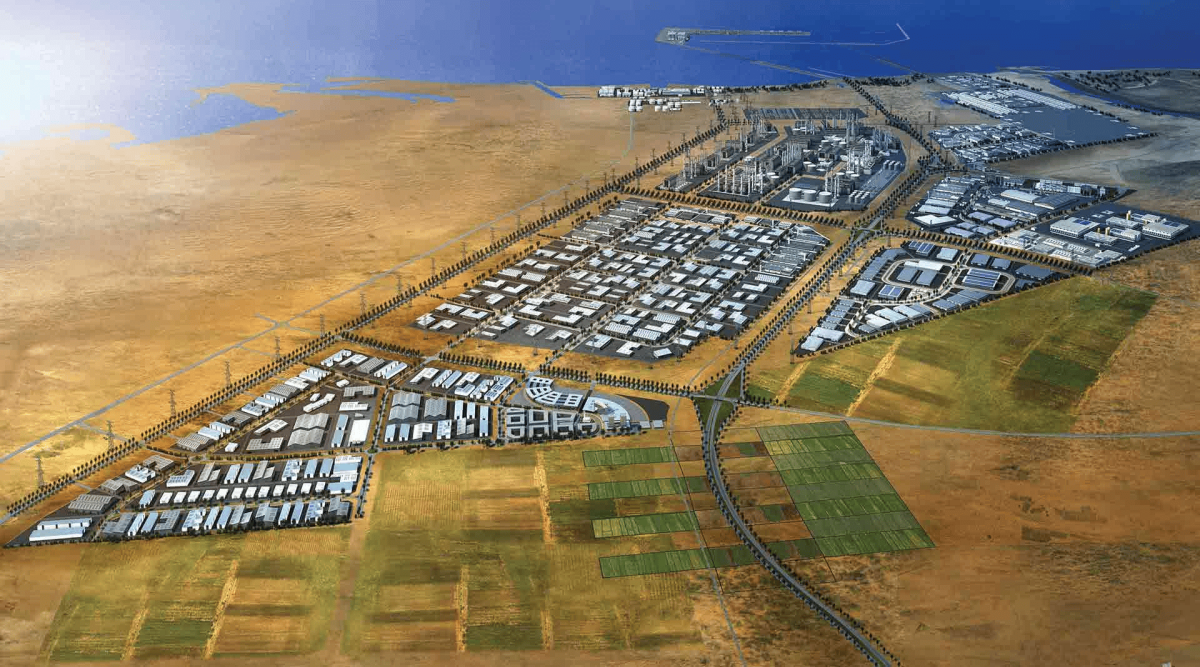
Image Credits: Khalifa Economic Zone (KEZAD) accessed via Middle East Free Zone
UAE Free Zones are designated economic zones within the United Arab Emirates designed to attract foreign direct investment. They operate under a separate legal and regulatory framework from the mainland UAE, offering a more business-friendly environment for international companies. A key advantage is 100% foreign ownership, allowing companies to be fully owned and operated by foreign entities without requiring a local sponsor or partner.
Article 25 of the Companies Law excludes Free Zones from the applicability of its laws. Each Free Zone has a distinct legal status with its own regulations applicable to subjected FZEs (Free Zone Enterprises) and employees operating within that zone, licensed by the relevant Free Zone Authority. For example, Dubai Airport Free Zone was established for FZEs with business activities in areas such as the aviation industry and pharmaceutical products.
The taxation advantages for FZEs are significant. Free Zones offer income and corporation tax holidays of a renewable period of fifteen to fifty years (each Free Zone is different) usually from the date of commencement of work, renewable by resolution of a Free Zone Authority Chairman or the Ruler of an Emirate
The process of setting up a business in a free zone is generally simpler and faster than on the mainland. Bureaucracy is often reduced, and administrative procedures are streamlined, allowing companies to quickly establish their operations. Free zones also permit the full repatriation of profits, meaning businesses can freely transfer their earnings back to their home countries without restrictions.
The above content has been taken from a brilliant research paper “Free Zones in the United Arab Emirates: Domestic and International Tax Issues” by Jon Truby on the ResearchGate website on June 2015.
Accelerate your Growth with the Right Industrial Space
Benefits of SEZ’s
Special Economic Zones (SEZs) offer a range of benefits designed to attract investment and boost economic growth. They are geographically defined areas within a country with different, more liberal economic regulations than the rest of the nation. Key advantages include:
The primary focus has been on SEZ policy characteristics. Fiscal incentives, such as corporate tax exemptions, duty free import and export, or value added tax (VAT) exemptions, traditionally form the backbone of any SEZ policy and are often considered key for SEZ success
01Tax incentives
SEZs often offer tax holidays or reduced tax rates for businesses operating within them, encouraging investment and job creation. This might include exemptions from corporate income tax, sales tax, or import/export duties.
02Simplified regulations
Businesses in SEZs typically face less bureaucratic hurdles and streamlined administrative procedures, making it easier and faster to set up and operate. This reduces red tape and saves businesses time and money.
03Infrastructure development
Governments often invest heavily in infrastructure within SEZs, including roads, utilities, and communication networks, creating a more efficient and attractive business environment.
01Tax incentives
SEZs often offer tax holidays or reduced tax rates for businesses operating within them, encouraging investment and job creation. This might include exemptions from corporate income tax, sales tax, or import/export duties.
02Simplified regulations
Businesses in SEZs typically face less bureaucratic hurdles and streamlined administrative procedures, making it easier and faster to set up and operate. This reduces red tape and saves businesses time and money.
03Infrastructure development
Governments often invest heavily in infrastructure within SEZs, including roads, utilities, and communication networks, creating a more efficient and attractive business environment.
04Focus on specific industries
Many SEZs specialize in particular sectors, such as manufacturing, technology, or logistics, fostering industry clusters and attracting related businesses. This creates synergies and facilitates collaboration.
05Job creation
By attracting investment and promoting business activity, SEZs contribute to increased employment opportunities, benefiting local communities.
06Increased foreign direct investment
The favourable conditions offered by SEZs encourage foreign companies to invest, bringing in capital, technology, and expertise.
07Export promotion
SEZs can be designed to boost exports by offering incentives and facilitating trade-related activities, contributing to a country's balance of payments.
04Focus on specific industries
Many SEZs specialize in particular sectors, such as manufacturing, technology, or logistics, fostering industry clusters and attracting related businesses. This creates synergies and facilitates collaboration.
05Job creation
By attracting investment and promoting business activity, SEZs contribute to increased employment opportunities, benefiting local communities.
06Increased foreign direct investment
The favourable conditions offered by SEZs encourage foreign companies to invest, bringing in capital, technology, and expertise.
07Export promotion
SEZs can be designed to boost exports by offering incentives and facilitating trade-related activities, contributing to a country's balance of payments.
The primary focus has been on SEZ policy characteristics. Fiscal incentives, such as corporate tax exemptions, duty free import and export, or value added tax (VAT) exemptions, traditionally form the backbone of any SEZ policy and are often considered key for SEZ success
Benefits of a logistics cluster
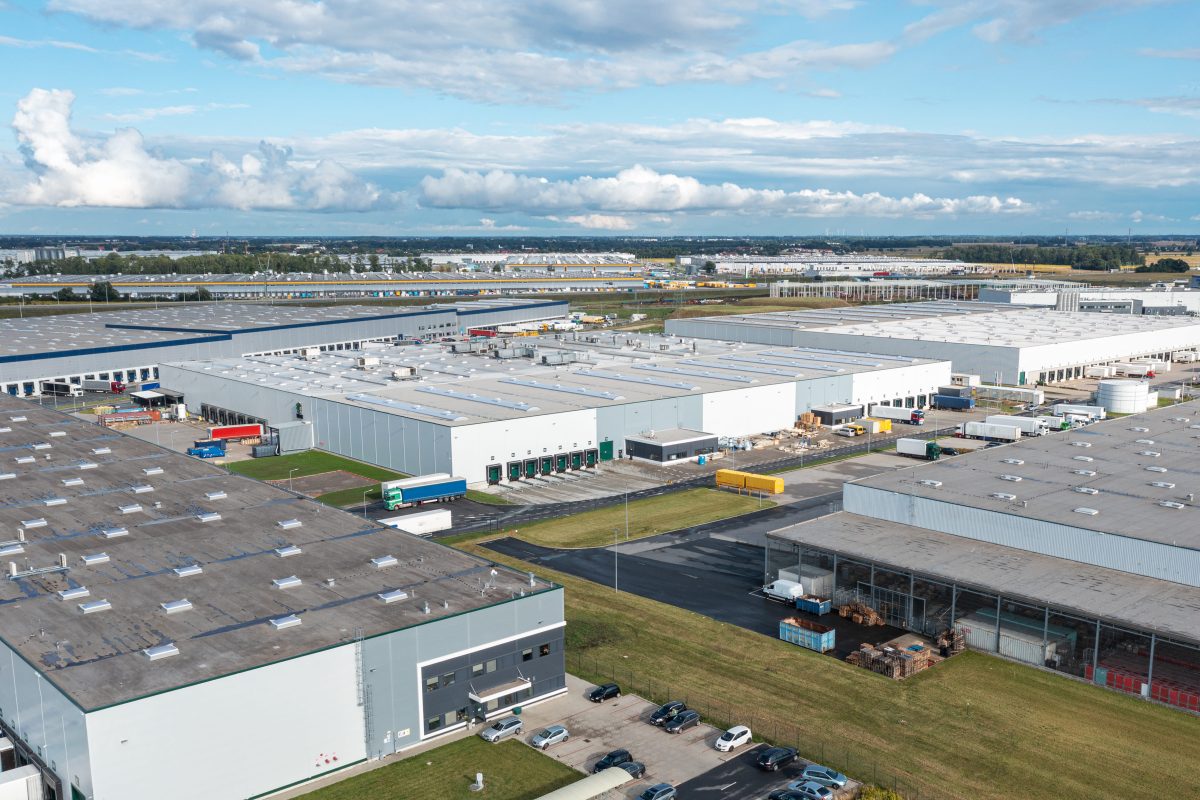
Logistics clusters—geographical concentrations of interconnected logistics companies and related industries—offer several significant benefits that enhance both individual firm performance and regional economic development. Key advantages include:
- Collaboration opportunities: Proximity within clusters facilitates partnerships among firms, enabling shared transportation and warehousing resources, leading to cost reductions and improved service efficiency.
- Value-added services: Clusters provide an environment conducive to offering additional services such as product customization and reverse logistics, enhancing customer satisfaction and creating new revenue streams.
- Career mobility: The diverse range of companies within a cluster allows logistics professionals to progress in their careers through various roles and organizations, fostering a dynamic and skilled workforce.
- Job creation: Clusters act as catalysts for employment growth at multiple levels, from entry-level positions to specialized roles, thereby boosting the local economy and supporting community development.
These benefits collectively make logistics clusters attractive to businesses and policymakers aiming to enhance logistics efficiency and regional economic prosperity.
Case study: The logistics cluster in Dubai
Dubai’s decision to foster and fortify its logistics cluster was made early on, as part of its larger diversification strategy, knowing it had limited resources to rely on going forward. The rulers of Dubai decided to capitalize on the city’s strategic location and set out to position the cluster as a hub between East and West. Today, with 70% of the world population within an 8-hour flight, Dubai positions itself as a gateway market to over three billion people. Flash forward to 2014, and logistics in the UAE now accounts for 6% of GDP. Freight forwarding, and transportation are the most important segments of the logistics market, each contributing 62% and 18% of logistics related revenue, respectively. The phenomenal pace at which the cluster has grown over time is truly impressive, considering milestones such as the opening of Jebel Ali Port and the establishment of Emirates Airlines, occurring as recently as 1979, and 1985, respectively. The emergence of the cluster was achieved very methodically, thanks to excellent governance, which enabled efficient execution.
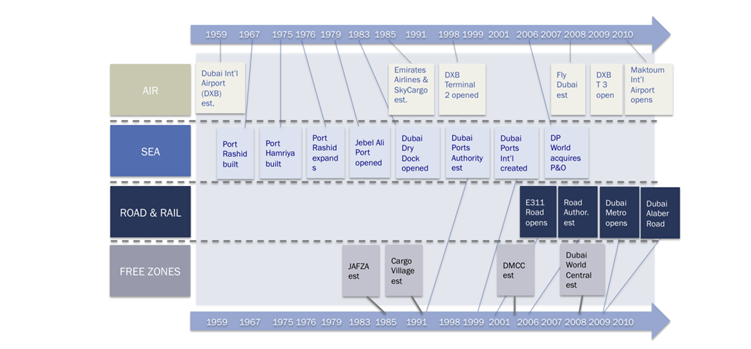
Image Credits: “Evolution of UAE transport” accessed via “The Dubai Logistics Cluster” case study, pg. 13, published by Harvard Business School.
Cluster map
As we can see in the cluster map, Dubai’s logistics cluster is centred around its strong infrastructure (especially in sea and air), the foundation upon which logistics services and terminal operators were then able to emerge and grow. Dubai’s road network, while not included in the cluster map, is also world-class, and serves to support cluster activities overall. Rail is an infrastructure area that is not a strength of this cluster, with only a metro in operation, and virtually no other type of real rail infrastructure.
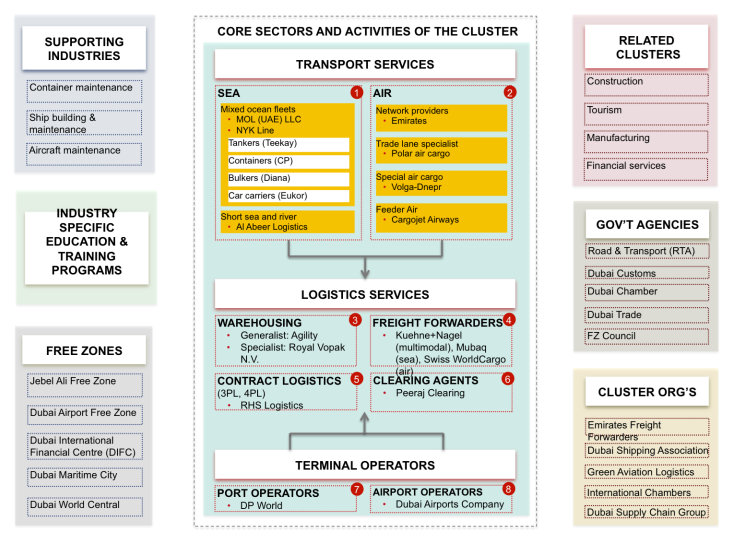
Image Credits: “Core Sectors of the Cluster” accessed via “The Dubai Logistics Cluster” case study, pg. 15, published by Harvard Business School.
Once again, it’s important to note just how successful Dubai has been in its key air and sea segments of the cluster core, by highlighting a few illustrative examples. Air Dubai International Airport DXB, which opened only 30 years ago, was the world’s busiest airport (69.5M passengers) in 2014, beating LHR and HKG; is home to Emirates Airlines (consistently ranked in top 5 airlines worldwide), Emirates SkyCargo (ranks 3rd worldwide in freight tonne km flown, after FedEx Express and UPS Airlines), and has attracted over 150 airlines to Dubai. Dubai World Central is a FTZ supporting logistics, aviation, commercial, exhibition, humanitarian, residential and other related businesses around AL Maktoum Airport.
Sea
The Port of Jebel Ali is consistently ranked in top 10 busiest ports worldwide in TEU (container traffic), and Dubai’s own Port Authority, established only in 1991, operates Dubai’s two main ports – Port Rashid and Jebel Ali Port, amongst the biggest manmade ports of the world.
Related & supporting clusters, & government authorities
As mentioned earlier, Dubai’s logistics cluster was planned strategically, in parallel with some significant related clusters – tourism, construction, manufacturing, and finance- and supporting industries – container, ship, and aircraft maintenance. Additionally, government policy was used in conjunction to create Free Zones, which were instrumental in attracting key tenants and foreign stakeholders to the cluster. Today, 22 FTZs support integration amongst logistics assets and provide ease + speed of doing business. Overall, strong governance has enabled the execution of large-scale cluster initiatives and efficient coordination between organizations. This strength in governance is perhaps Dubai’s most important current competitive advantage.
Positioning
Dubai’s creation of one of the largest sea-land-air hubs positions it as a unique provider of sea-air option for Asia-Europe trade, savings customers up to 50% when compared to shipping by air freight, in addition to a much faster transit time when compared to shipping by pure ocean freight. Secondly, Dubai positions itself as an important gateway for import/export to the Middle East & Africa, and for re-exports in the Persian Gulf (Dubai is the world’s third largest re-export hub.
Linkages
When considering any logistics cluster, it is also important to consider how strong linkages may be between different segments of the cluster. In the case of Dubai, the ability and opportunity to master plan many parts of the city from scratch, paired with the strong governance to be able to execute on such plans, has enabled efficient linkages and integration which enhance overall cluster strength. Although 10 years ago, one might point out that linkages were not seamless in all cases – for example, DXB Airport is not located directly next to either of Dubai’s ports) – today, one may argue that strong linkages are also one of Dubai’s key competitive advantages.31 The area shown above is the perfect illustration of these strong linkages, with Jebel Ali Port (Middle East’s largest port) and Dubai World Central-Al Maktoum Airport (world’s largest airport) embedded in one customs free zone, where no customs bond is required for goods in transit arriving by ocean and departing by air. Physical proximity and integration also contribute to faster cycle times and lower costs. Cargo can be ready for flight in as little as 6 hours from arrival at the port.
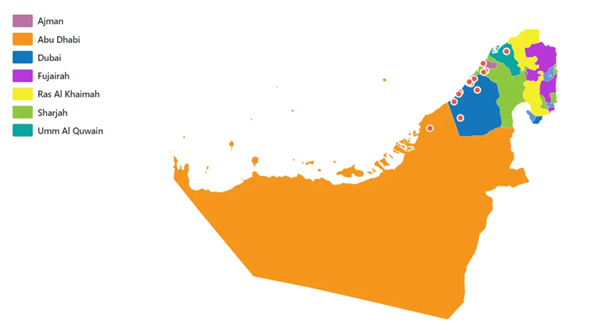
Image Credits: “Free Zones in UAE”, accessed via Dynasty UAE
The Dubai Sea-Air Logistics Corridor features e-services hosted by Dubai Trade which integrates services of DP World, Jafza, Dubai Customs & Dubai Commodities Centre – essentially, no paperwork is involved. Efficiency achieved through integration has made Dubai the cheapest place worldwide to both export ($665/container) and import ($625/container), after Singapore and Hong Kong.
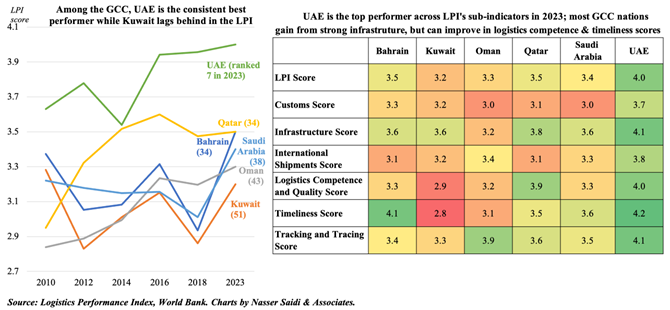
Image Credits: “LPI Chart for the UAE”, 28th April 2023, by Nasser Saidi & Associates accessed via Nasser Saidi.com
The UAE has the best performance by far, but despite holding tight to its first place, there are many challenges that Dubai’s cluster could face in the long run. As neighbouring countries intensify their effort in diversifying away from natural resources, it could become harder and harder for Dubai to compete. For example, Qatar, which is one of the wealthiest countries in the world, has been trying to play a bigger role in the local scene. This was clearly manifested when they won the hosting of the 2022 World Cup. Qatar’s appetite is expanding into other areas such as logistics. For example, Qatar Airways has been rising by expanding globally and poses fierce competition to Emirates. Additionally, Qatar opened the Doha Airport and the Sea Port, both of considerable size.
The above content has been taken from a brilliant research paper published in the Harvard Business School titled “THE DUBAI LOGISTICS CLUSTER” by authors Alanood Bin Kalli, Camila Fernandez Nova, Hanieh Mohammadi, Yasmin Sanie-Hay, Yaarub Al Yaarubi in the year 2015.
Industrial cities in the United Arab Emirates (UAE) offer numerous benefits that contribute to the nation’s economic diversification and growth. These specialized zones provide a supportive ecosystem, including access to business support services, networking opportunities, and industry-specific incentives, fostering collaboration and innovation among businesses.
Situated at the crossroads of Europe, Asia, and Africa, the UAE’s industrial cities, such as Dubai Industrial City, offer businesses access to a vast and growing market. These zones are equipped with state-of-the-art facilities and robust infrastructure, supporting a wide range of industries, from manufacturing and logistics to high-tech and automotive sectors.
Initiatives like “Make it in the Emirates” invite industrialists, investors, innovators, and entrepreneurs to engage with the Ministry of Industry and Advanced Technology, benefiting from the UAE’s exceptional value proposition to develop, manufacture, and export products.
Industrial cities like Masdar City in Abu Dhabi are designed with a focus on sustainability, integrating renewable energy sources and green building practices. Masdar City Free Zone supports a diverse range of businesses, from startups and SMEs to multinational corporations, providing an ecosystem that accelerates innovation and growth.
In summary, the UAE’s industrial cities play a pivotal role in fostering economic diversification, innovation, and sustainable development, offering businesses a conducive environment to thrive in a competitive global market.
Selecting the right industrial real estate is crucial for optimizing manufacturing, logistics, and supply chain efficiency. A strategic location near transportation hubs reduces shipping costs and delivery times, improving overall operations. Proximity to suppliers and customers enables just-in-time inventory, minimizing storage costs. Additionally, industrial clusters foster collaboration, resource sharing, and innovation.
Modern facilities with sustainable infrastructure help meet environmental goals, reducing carbon emissions and operational costs. Adaptable spaces support future expansion and automation, ensuring long-term viability.
By considering these factors, businesses can enhance efficiency, cost-effectiveness, and market competitiveness, making industrial real estate a key driver of success.
Intermodal transport connectivity & infrastructure in the UAE

The United Arab Emirates (UAE) has been strategically investing in its intermodal transport infrastructure and connectivity to become a leading international logistics centre. This development involves the convergence of different modes of transport—sea, air, road, and rail—to enable smooth cargo movement.
UAE has world-class ports, Jebel Ali Port in Dubai and Khalifa Port in Abu Dhabi, which are key maritime gateways connecting Asia, Europe, and Africa. The ports have facilities to handle various cargoes, with efficient sea-land intermodal transfer.
Dubai International Airport (DXB) and Al Maktoum International Airport (DWC) are among the busiest air freight traffic gateways in the world. DWC expansion plans are expected to place DWC among the world’s top freight airports and improve air-land connectivity.
Etihad Rail forms the backbone of the UAE vision to establish intermodal connectivity. The project connects commercial and industrial hubs with seaports, promoting efficient land transport and eliminating road traffic.
The UAE National Smart Mobility Strategy aims at smart intermodal mobility leadership by 2030 in the areas of compatible infrastructure, integrated systems, and flexible rules.
The UAE is a leader with air taxi and cargo drone air corridors, planning to incorporate advanced air mobility into the transport infrastructure by 2026, which will further improve intermodal connectivity.
All these initiatives indicate the UAE’s attempts to create a strong intermodal transport system, enhancing its reputation in the field of global logistics.
Sea connectivity & proximity to shipping ports
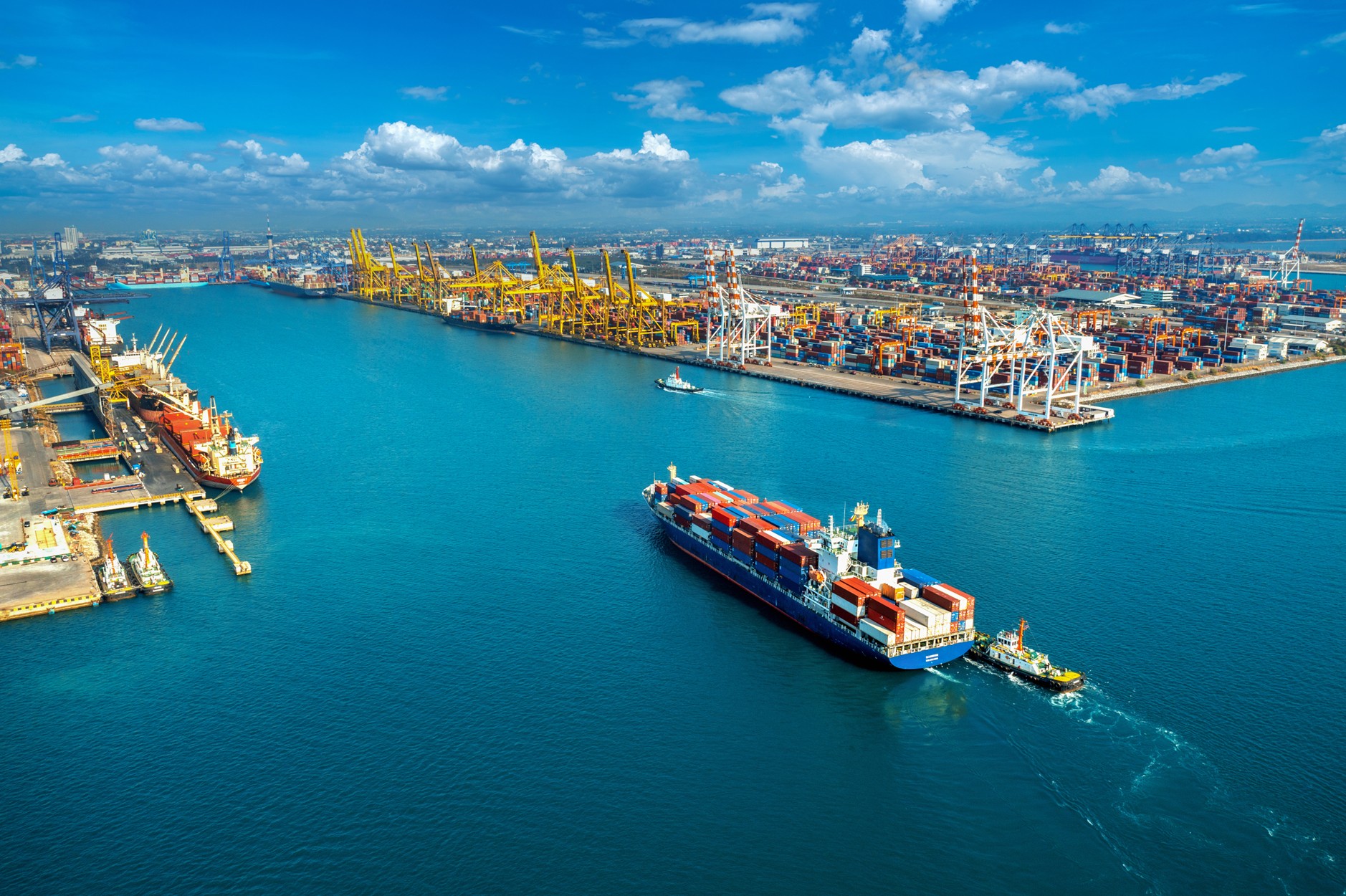
The UAE’s seaports are international and regional hubs and an essential factor in driving economic growth and facilitating economic diversification.
The country’s sea transportation sector is developing steadily in terms of ports, operating ships, maintaining and constructing dry docks in accordance with the international standards on maritime safety and protection of the marine environment.
The UAE has several seaports. According to the World Shipping Council, two of the world’s top 50 container ports are in the UAE, with Dubai featuring among the top ten.
Overall, 61 per cent of cargo destined for GCC states arrives via the UAE’s seaports. The UAE has 12 commercial trading ports, other than oil ports. It contains 310 berths, with cargo tonnage of 80 million tonnes.
Major seaports in the UAE include:
- Zayed Port
This port in Abu Dhabi city was the emirate’s main general cargo port for 40 years. Currently, it is dedicated for cruise liners.
- Mina Rashid and Jebel Ali Port
These ports in Dubai city are operated by DP world and play a pivotal role in the trade in the UAE.
- Khor Fakkan Container Terminal (KCT)
This port in Sharjah is the only natural deep water port in the region, with a strategic geographical position for deep sea container trade.
- Mina Saqr
In Ras Al Khaimah.
- Fujairah Port
It is a multi-purpose port which is strategically located at the Gulf of Oman.
- Khalifa port
Khalifa port is a massive new AED 26.5 billion, 420 square kilometres port that will spring industrial development in Al Taweelah area in Abu Dhabi. It is the first semi-automated port in the Middle East and North Africa. The commercial activities of the port started on 1 September 2012. Abu Dhabi Ports Company (ADPC) is developing the project and Abu Dhabi Terminals (ADT) operates its terminals.
It serves over 25 shipping lines, offers direct links to 70 international destinations, and boasts an intermodal transport network facilitating efficient transportation and logistics across sea, road and air. The port will also be the first in the UAE to be linked to the new Etihad Rail network, which is currently under construction. It will also serve as a main gateway for Kizad, which is set to become the largest industrial city in the region covering an area of nearly 420 square kilometres of prime industrial land.
The above content has been taken from the “Seaports” page of the The United Arab Emirates’ Government portal published on 1st February, 2024.
Connectivity & proximity to highways

The UAE’s well-developed road network ensures seamless transportation for industries and logistics. Key highways like Sheikh Zayed Road (E11), Emirates Road (E611), and Sheikh Mohammed Bin Zayed Road (E311) provide efficient connectivity between major industrial zones, ports, and urban centres.
Industrial hubs like Jebel Ali Free Zone and Dubai Industrial City benefit from proximity to highways, reducing transit delays and costs. The upcoming Etihad Rail will further enhance connectivity, integrating road and rail transport for smoother freight movement.
With continuous infrastructure investments, the UAE remains a prime destination for industries requiring strong land connectivity and supply chain efficiency.
Access to rail & freight trains
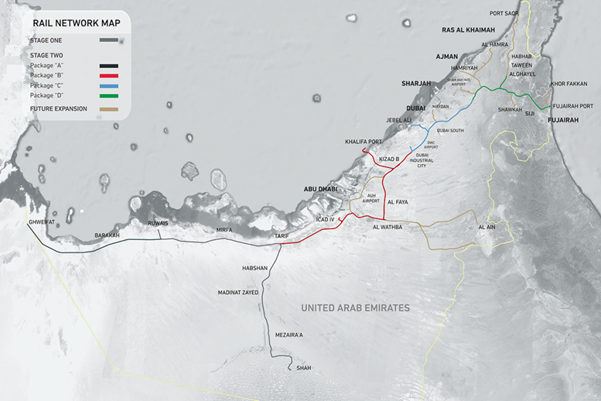
Image Credits: “UAE Rail Network Map”, 25th July 2022, accessed via Construction Briefing.com
Etihad Rail
Etihad Rail is a 1,200km railway infrastructure network connecting the United Arab Emirates (UAE) and the region. Completed in February 2023, the GCC railway network connects the UAE with Saudi Arabia, Qatar, Kuwait, Bahrain, and Oman. It is one of the biggest rail projects in the world which connects the UAE’s ports and industrial centres. Etihad Freight Rail service is already operational and is used to transport goods and materials across the Emirates, keeping heavy trucks off UAE roads. The freight trains are now operating across the UAE, with a fleet consisting of 38 locomotives and over 1,000 wagons capable of carrying a wide range of goods.
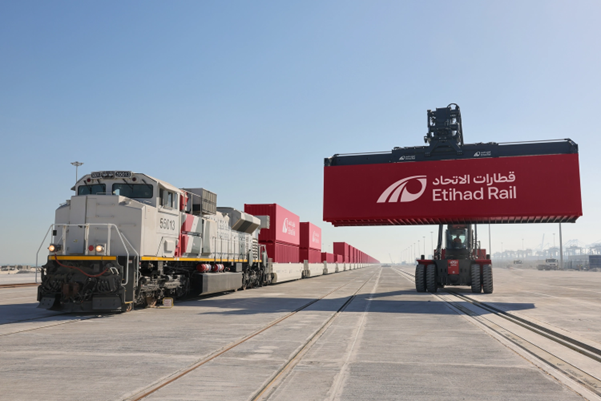
Image Credits: “A container being loaded on a freight train”, accessed via Etihad Rail
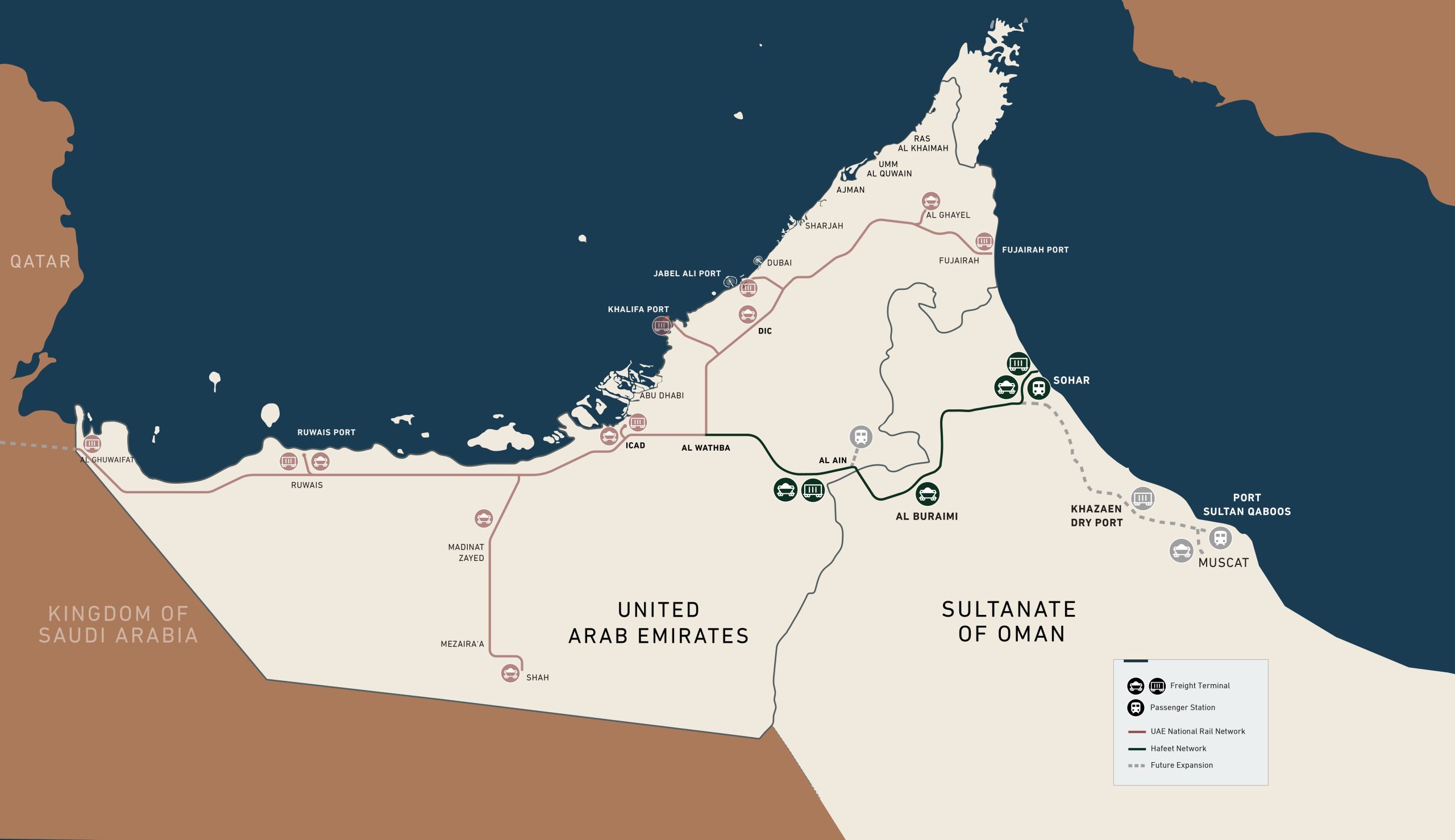
Image Credits: “The rail network linking Oman & UAE” via Hafeet Rail
The UAE is rapidly expanding its rail and freight train connectivity to enhance logistics efficiency and industrial growth. The Etihad Rail network, a key infrastructure project, connects major industrial zones, ports, and urban centers, reducing reliance on road transport and cutting logistics costs.
Industrial hubs such as Jebel Ali Free Zone, Khalifa Industrial Zone (KIZAD), and Dubai Industrial City benefit from proximity to rail networks, enabling faster and more cost-effective freight movement. The rail system is designed to handle bulk goods, containers, and heavy cargo, improving supply chain reliability.
By integrating with highways and ports, Etihad Rail strengthens intermodal transport, reducing congestion and emissions while supporting sustainable logistics. With continued investments in rail infrastructure, the UAE is set to become a leading regional freight and logistics hub, ensuring seamless land connectivity for industries and businesses.
According to a project map from the GCC, the railway network will begin in Kuwait and extend to Dammam on Saudi Arabia’s eastern coast. From there, the network will split into two directions: one towards Bahrain and then Qatar via two sea bridges, and the other towards the southern Saudi coast, following the eastern shores of the Kingdom.
The two routes are planned to converge at Salwa Port on the border between Saudi Arabia and Qatar. From there, the network continues southward along the UAE coast, reaching Abu Dhabi, then extending southward into the desert towards al-Ain on the UAE-Oman border, and further on to Sohar and Muscat on the Gulf of Oman’s shores.
The entire route will span 2,117 km, facilitating the transportation of goods and passengers from Kuwait in the north to Muscat in the south. According to the GCC’s plan, passenger trains will travel at speeds up to 220 km/hour, while freight trains will operate at speeds ranging from 80 to 120 km/hour. The estimated total cost for completing the network could amount to approximately 15 billion US dollars, as projected by the GCC’s economy ministers.
The above content has been taken from the “GCC Railway Project: On the Right Track?” article of the Fanack.com website published on 3rd September 2024.
Air connectivity & proximity to airports
The UAE’s air connectivity and proximity to major airports make it a global leader in logistics and trade. Home to world-class airports like Dubai International Airport (DXB), Al Maktoum International Airport (DWC), and Abu Dhabi International Airport (AUH), the country ensures efficient cargo movement across continents.
Industrial hubs such as Jebel Ali Free Zone (JAFZA), Dubai Industrial City, and Khalifa Industrial Zone (KIZAD) are strategically located near these airports, enabling fast air freight handling and minimizing transit times. DWC, part of Dubai’s Logistics Corridor, is set to become the world’s largest cargo hub, further boosting air connectivity.
With state-of-the-art air cargo terminals, free zones, and multimodal transport links, businesses benefit from seamless global distribution, reduced supply chain delays, and enhanced operational efficiency. The UAE’s continued investment in airport infrastructure solidifies its position as a key aviation and logistics hub, connecting businesses to international markets effortlessly.
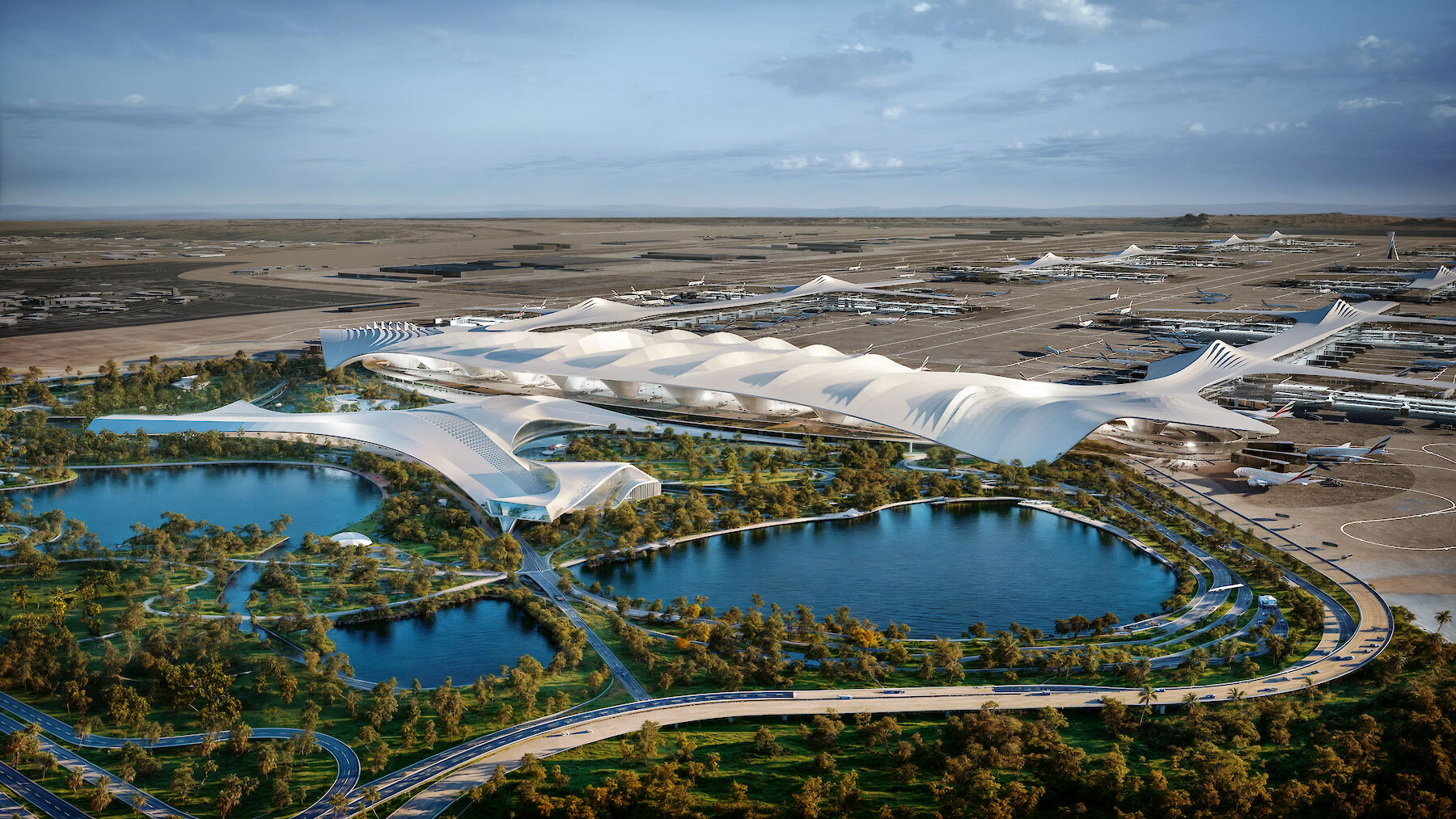
Image Credits: “A concept design of Al Maktoum International Airport”, accessed via Coop Himmelblau
Dubai World Central (DWC, also known as Al Maktoum International Airport, located in Jebel Ali, Dubai) is undergoing expansion to increase passenger capacity.
Approved in 2014, the Dh128bn ($34.84bn) expansion project is being undertaken by the Dubai Aviation Engineering Projects (DAEP), an autonomous entity responsible for the planning and development of Dubai’s airports.
The project will make the airport approximately five times the size of Dubai International Airport, currently the largest airport in Dubai. It will also make the airport the world’s biggest, in terms of size and passenger capacity by 2050.
Recommended steps for shortlisting & finalizing industrial real estate
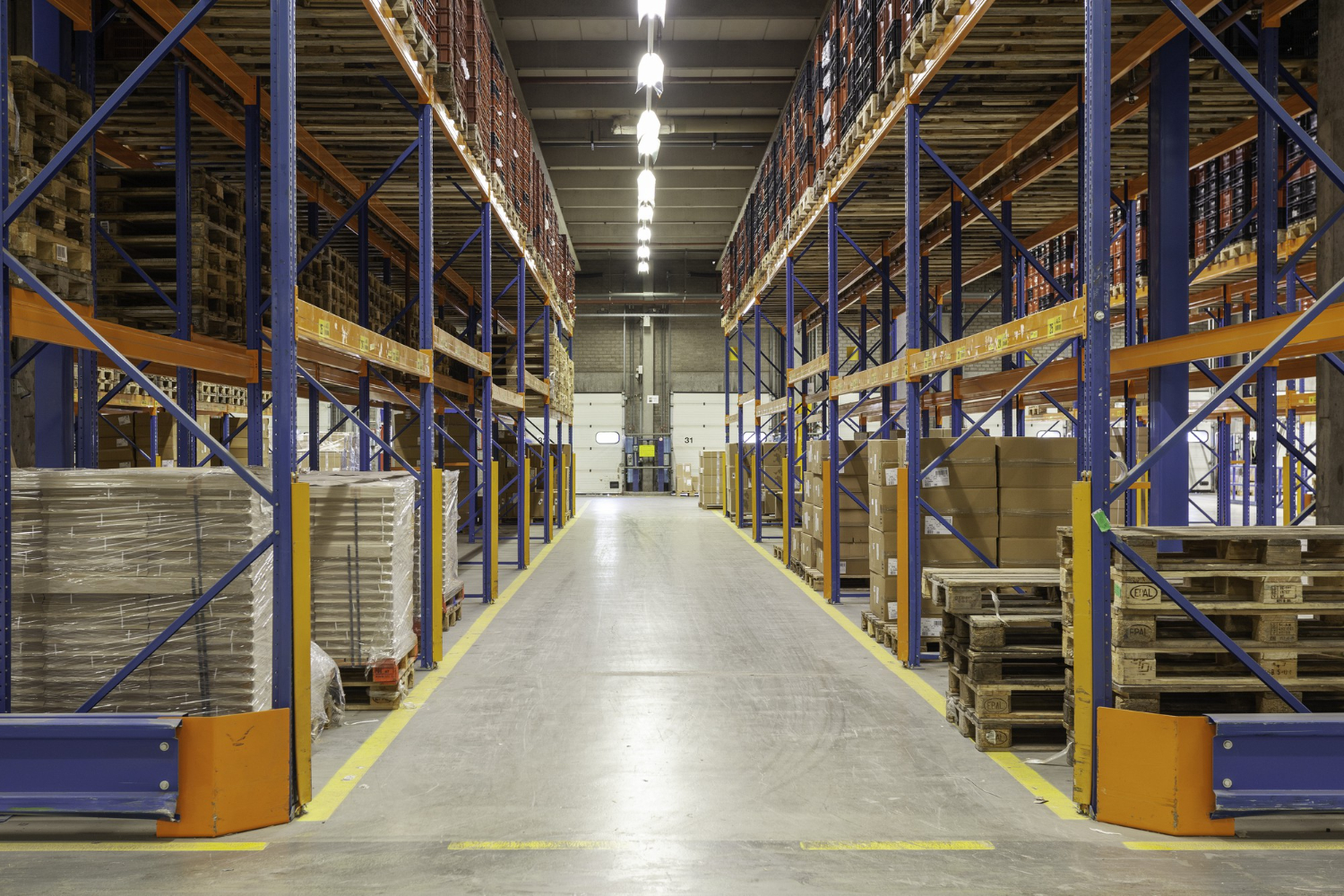
Understanding the operational footprint needs and requirements is crucial before finalizing industrial real estate. Firstly, assess the size and layout requirements. The space must accommodate current operations and future expansion plans. Secondly, location is key. Proximity to suppliers, customers, and major transportation hubs like highways, ports, and railroads reduces transit times and costs. Thirdly, consider technological requirements. Modern industrial operations often rely on advanced automation, robotics, and data management systems.
Identifying and listing decision variables and parameters is essential before finalizing industrial real estate. Decision variables include the size and layout of the space, location proximity to suppliers and customers, and facility infrastructure needs such as power and water supply. Parameters involve zoning regulations, environmental compliance, and budget constraints.
When sourcing a site and exploring real estate options for industrial purposes, consider factors like location, size, and infrastructure. Conduct a thorough market analysis to understand pricing trends and negotiate favourable terms. By carefully analysing these aspects, businesses can secure a site that meets their operational needs and supports long-term growth.
To shortlist real estate options for industrial purposes, start by analysing and scoring each potential site based on key decision variables such as location, cost, infrastructure, and scalability. Consider future expansion potential, proximity to suppliers and customers, transportation access, utility availability, and compliance with zoning regulations. Summarize the scores to identify the top contenders, ensuring a data-driven approach to selecting the most suitable site for your business needs.
Designing a facility and internal layouts using Lean Six Sigma and sustainability principles involves optimizing efficiency, reducing waste, and promoting environmental responsibility. Lean Six Sigma focuses on streamlining processes, improving workflow, and minimizing defects through data-driven analysis and continuous improvement techniques. By integrating these approaches, facilities can achieve higher productivity, lower operational costs, and a smaller environmental impact.
Operationalizing the site involves putting the newly designed facility into action efficiently and effectively. This includes setting up all necessary infrastructure, installing equipment, and ensuring that all systems are fully functional. Staff must be trained on new processes and safety protocols, while workflows are tested and optimized. Continuous monitoring and adjustments are essential to ensure smooth operations. This phase aims to transition from construction to full-scale production or service delivery, ensuring that the site operates at peak efficiency from day one, meeting all business objectives and regulatory requirements.
Amazon warehouse placement case study
Few businesses can compete with Amazon—not just as a retailer, but also in shipping, data management, and even warehousing. To become the juggernaut it is today, Amazon has evolved to provide many of its necessary service needs.
For its warehousing needs alone, for example, Amazon reportedly owns nearly 319 million square feet of fulfilment centre floor space in the United States. Though that is a massive number, consider that Amazon’s warehouse placement is designed to keep shipping times as low as possible. In other words, Amazon warehouses have been strategically placed all over the country.
Strategic warehousing allows Amazon to ensure that goods are already nearby when a customer places an order. It also enables the company to focus on efficiency and cost-effectiveness for shipping. This is how Amazon can offer free next-day or two-day shipping.
Transportation occupations are some of the most dangerous jobs. In 2018 alone, workers’ injuries and illnesses in transportation and material moving accounted for 20% of all injuries. These statistics also include related transportation roles, such as mechanics and transport-related warehouse jobs.
Strategic warehouse placement reduces the time that trucks and other transport options need to be used. Shorter travel periods can also decrease the time that vehicles are on the road and, thus, can help with driver fatigue. Furthermore, using strategic warehouse placement in high-volume areas will:
- Ensure the fastest shipping times by decreasing the hindrance of supply bottlenecks.
- Keep high-volume items well-stocked, eliminating unplanned shipments.
- Benefit from courier usage to deliver goods where larger delivery options may struggle (such as residential or historic areas).
A strategically placed warehouse is optimized inside and out. Shipping costs and speeds are affected by more than the distance. Without optimized functions and employees, warehouses and shipping will suffer.
No matter the industry, however, warehouse safety is essential. Injured workers won’t be working and could be costing money. Perhaps more importantly, a poorly managed warehouse will drag down morale, handling speeds, and efficiency. Mistakes will pile up, just like the hazards that surround the workers.
Today’s supply chain management goals are meant to ensure customer satisfaction. Two-day or next-day shipping is no longer a leg up over other service. Rapid shipping is now the expected offering. Larger fleets or faster processing lines alone won’t speed up shipping times if the warehouse is located across the country.
Therefore, strategically placing warehouses ensures that goods are always within your customers’ desired shipping times. Amazon’s vast number of warehouses allow for same-day shipping in some areas. Often, within hours of an online order, the purchased item is at the customer’s door. It doesn’t get much faster than that. This is achieved by the vast amount of strategic square footage Amazon devotes to customer satisfaction.
The above content has been taken from a brilliant article “Amazon: A Case Study in How Strategic Warehouse Placement Can Drastically Reduce Shipping Times” published on the Facilities Management Advisor website on April 27, 2022,
UAE case study
The UAE’s industrial market exhibited resilience driven by the demand for quality industrial assets, especially within established free zones. Warehouse rents across all submarkets in Dubai experienced a notable jump, with an average 14% y-o-y growth in Q2. Developers, confident in the enduring demand, launched new plans to deliver additional stock. Dubai Industrial City announced a 1.3 million sq. m. expansion plan following a 97% occupancy rate in the previous quarter, accompanied by a healthy 9% y-o-y growth in rental rates. Similarly, JAFZA and Dubai South also unveiled new projects, enhancing the supply of high-quality developments. In Abu Dhabi, the industrial real estate market exhibited positive momentum. Indeed, average warehouse rents surged 10% y-o-y in the second quarter. Industrial developments like KEZAD and ICAD attracted businesses seeking Grade A warehousing spaces with excellent trunk infrastructure and vacant lands. The self-developed and leased assets of KEZAD Group achieved an 88% occupancy rate, indicating robust demand for quality spaces. Additionally, KEZAD is pioneering a project in Al Ain Industrial City, covering 70,000 sq.m.
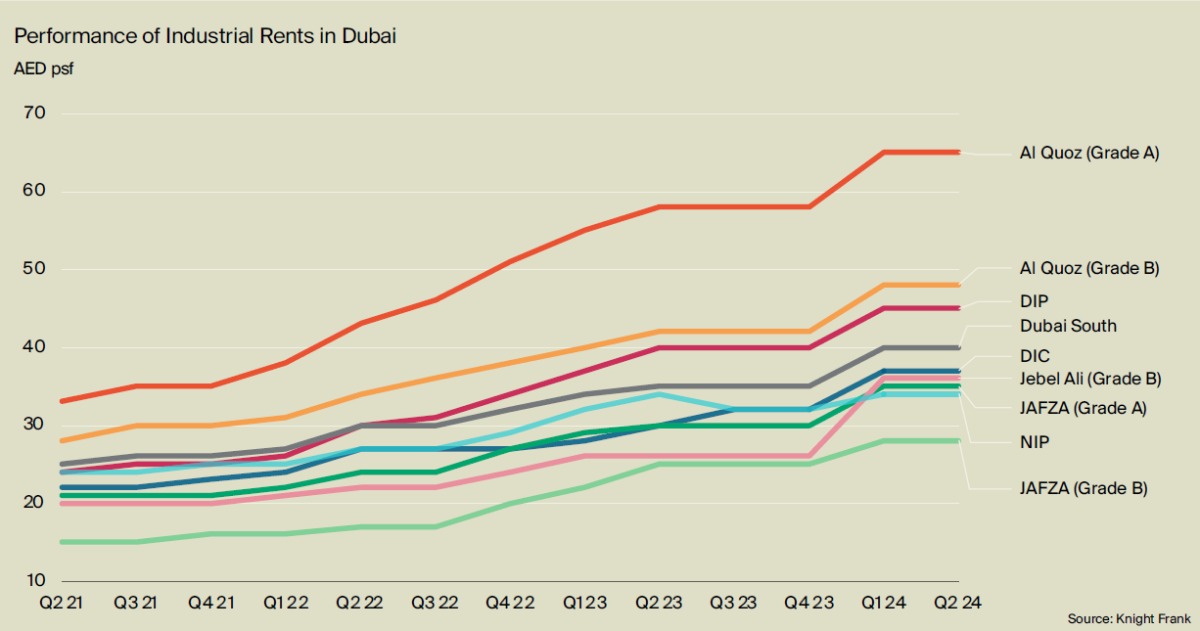
Image Credits: “Performance of Industrial Rents in Dubai”, by Knight Frank accessed via Construction Week Middle East
Strong FDI inflows and government programmes will continue to attract key global players, driving Dubai’s industrial market. Developers are expected to capitalise on increased demand, focusing on delivering new investment-grade supply. Occupiers will actively seek opportunities in free-zone developments with developed infrastructure and quality stock. However, in the capital, strategic partnerships with local and international industrial players will diversify the economy as part of ‘Operation 300bn’. These collaborations anticipate generating increased demand in related industries and supporting sectors. Prime industrial estates like KEZAD will develop specialized clusters to accommodate growing demand from various sectors. This includes the construction of the KEZAD metal park, the Abu Dhabi Food Hub, and the Global Auto Hub to meet the rising demand from the automotive, metal, agtech, and food sectors. The competitive labour and energy costs in Abu Dhabi will also play a significant role in attracting key players and capturing demand overflow from other emirates.
The above content has been taken from a brilliant report titled “UAE Industrial Market Dynamics, Q2 2024” by Research Director Faraz Ahmed and contributors Muhammad Aijaz, Sara Alameddine on the JLL website dated July 18, 2024
Case study: Lulu hypermarket’s supply chain in the UAE
Lulu Hypermarket is the largest hypermarket chain in the country. It also has numerous outlets in other GCC countries and is considered a leader in retailing in the Middle East. The analysis of supply strategy employed by Lulu Hypermarket chain helps to explore the specifics of retailing business in the United Arab Emirates and define the challenges met by the company in establishing an effective supply chain.
As Lulu Hypermarket sells a wide range of products, each of the categories requires an effective supply chain system. Digital products, fashion and lifestyle products, grocery and fresh food products, and home décor and household products have certain special characteristics that lead to the differences in the process of providing their continuous supply.
Warehousing management is one of the strongest sides of the company’s logistics strategy that benefits it with significantly reduced costs for transportation and helps to provide fresh food products. The company uses the LFS400 warehouse management system for its hypermarket chain in the United Arab Emirates, as well as in other countries of the region. Therefore, the effectiveness of their supply heavily relies on the warehousing systems enabling constant access to these products and prevention of their shortages. While constant food products supply depends on the speed of transportation from foreign distributors, digital and household products supply depends on the efficacious organization of their storage.
The above content has been taken from a brilliant article “Lulu Hypermarket’s Supply Chain in the UAE” published on the StudyCorgi website on October 29, 2020
Types of analyses to support decision-making
- Centre of gravity from supplier and customer perspective
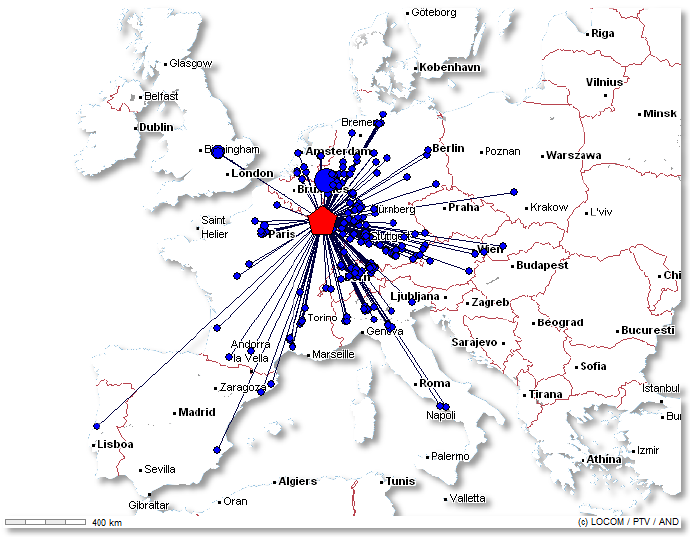
Image Credits: “Centre of Gravity map” accessed via a forum on Tableau
The center of gravity approach in logistics helps find the best location for a warehouse or distribution center to minimize transportation costs. Imagine plotting all your suppliers and customers on a map. Each point on the map represents a place where goods need to be sent or received. The center of gravity is like the perfect middle spot on this map, where moving goods from the warehouse to all these points is the easiest and cheapest. By placing the warehouse here, companies save time and money on transportation, making their logistics operations more efficient.
- Spaghetti diagram
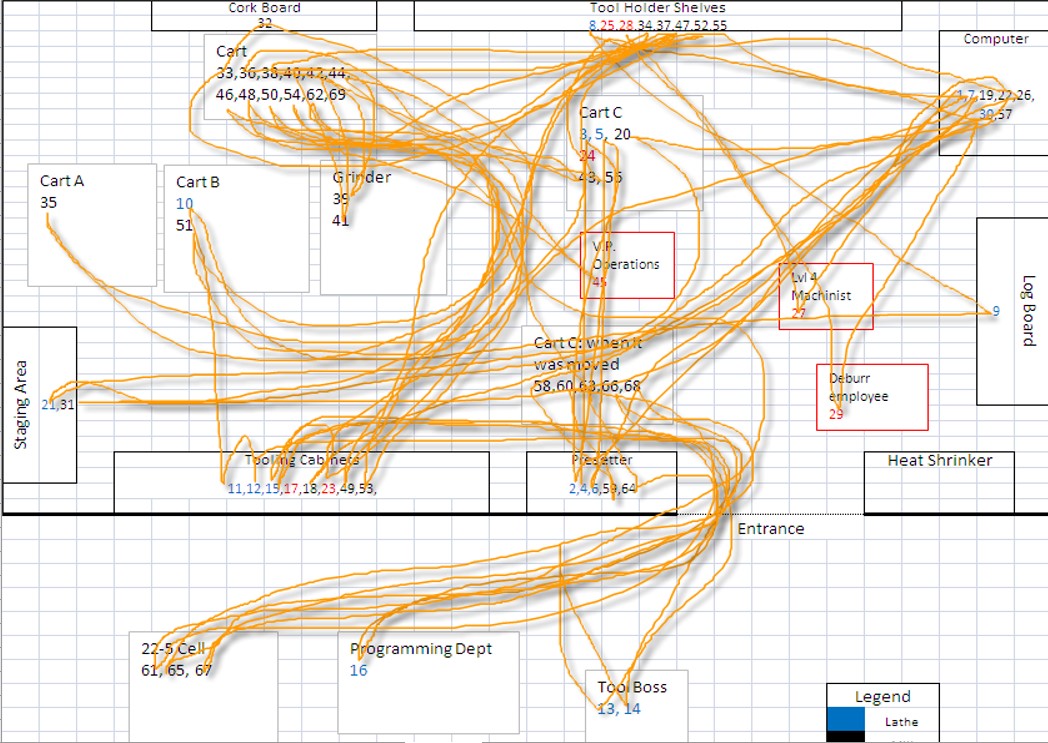
Image Credits: “Spaghetti Diagram”, by Tom Reed accessed via American Lean.com
A spaghetti diagram is a simple visual tool used in lean manufacturing to show the flow of materials, people, or information in a process. By mapping out these paths, the diagram highlights inefficiencies, such as excessive movement or backtracking. Using a spaghetti diagram, teams can optimize their movements to boost productivity and improve preparation and delivery times.
Let’s say the supervisor of a factory floor wants to understand how workers are moving from one station to the next. They can use a spaghetti diagram to visualize it and implement adjustments to the layout so that it cuts out unnecessary movements and helps workers prepare products faster.
- ABC analysis & heat maps to locate goods in warehouses
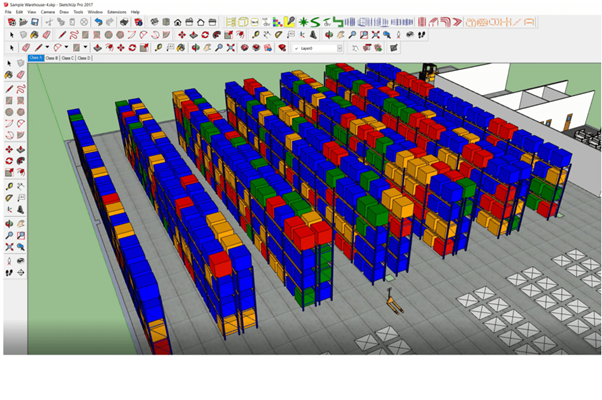
Image Credits: “ABC Analysis & Heat Maps”, by Tom Reed accessed via American Lean.com
ABC analysis can be used in warehouses to improve inventory management based on their value and importance to the business: A (high-value items), B (medium-value items), and C (low-value items). It helps businesses save money by focusing on the A items and avoiding unnecessary stocking and managing of unimportant items. It also helps businesses prioritize their inventory items for ordering, reordering, and replenishment. However, it can present some challenges, such as difficulty in accurately classifying items into the ABC categories, difficulty in obtaining accurate and up-to-date data on the items, and difficulty in determining the exact inventory levels that are needed for the A, B, and C items.
For example, retailers like Amazon do not keep stock of every single item offered on its website. The stocks of only the popular items that are frequently purchased are maintained. If there is an order for an unpopular item, then Amazon would request it from its distributor, who would then ship it to the company.
- Time studies industrial engineering principles
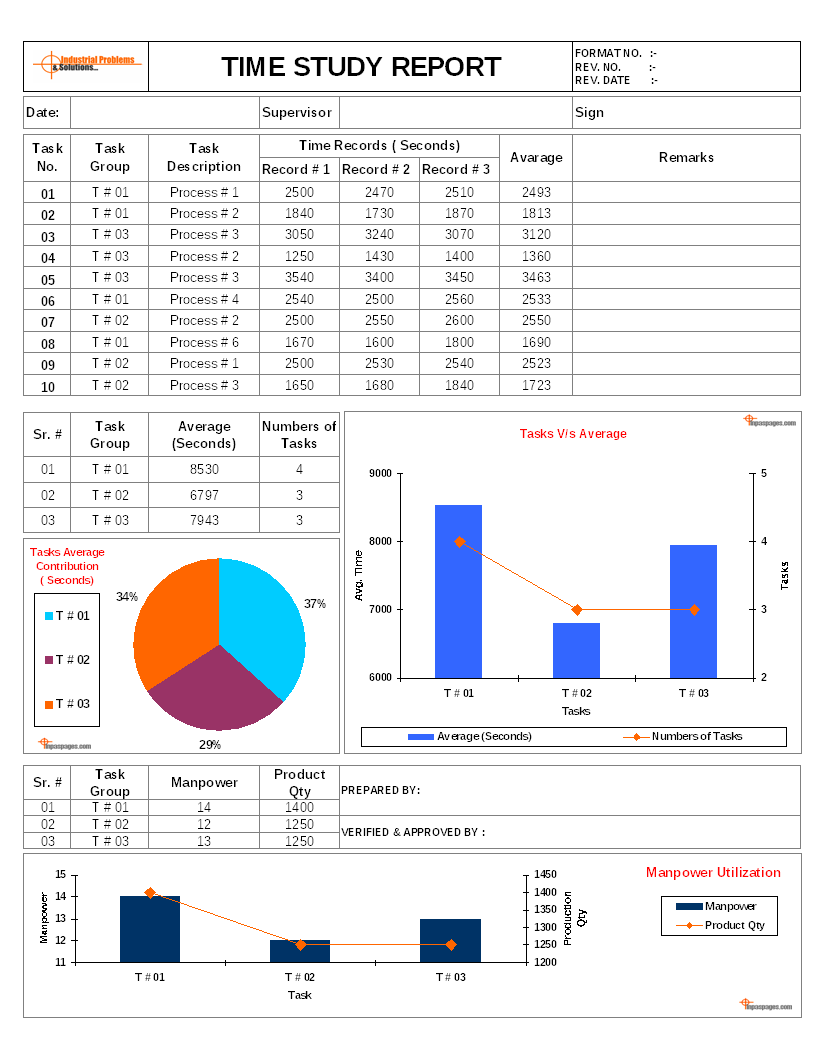
Image Credits: “Time Study Report”, December 14, 2015, accessed via Industrial Problems & Solutions.com
Time study in operations management is a method used to determine the time required to complete a specific task or job. It involves observing and recording the time taken by an average worker under normal working conditions to perform each part of the task. The goal is to establish standard times for tasks, which can help in setting performance benchmarks, improving efficiency, and planning workloads.
Industrial engineering principles aim to optimize systems, processes, and organizations to enhance efficiency, productivity, and quality. These principles involve viewing the organization as an interconnected system, understanding how components interact, and streamlining operations to reduce waste and maximize output.
Value stream mapping
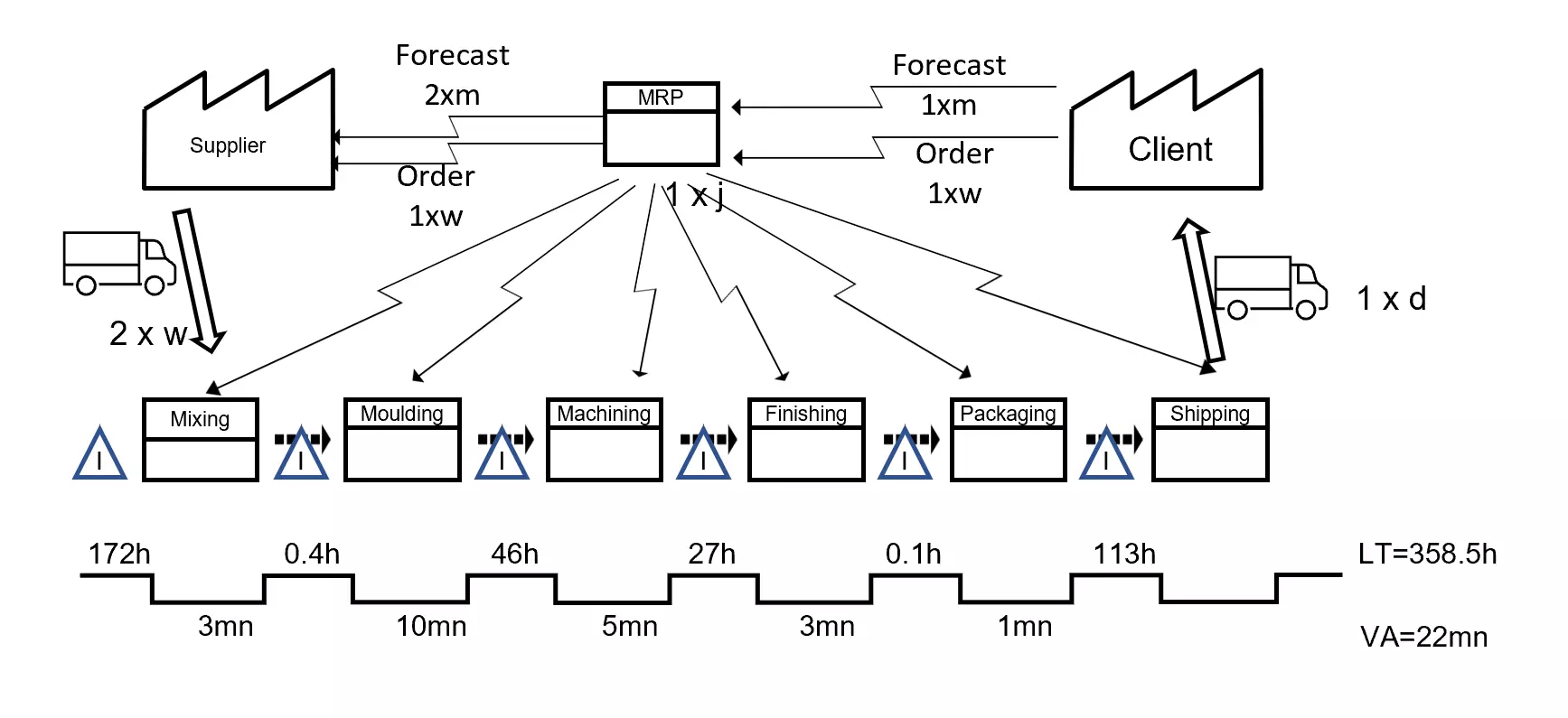
Image Credits: “Value Stream Map”, December 14, 2015, accessed via Wevalgo.com
Time study in operations management is a method used to determine the time required to complete a specific task or job. It involves observing and recording the time taken by an average worker under normal working conditions to perform each part of the task. The goal is to establish standard times for tasks, which can help in setting performance benchmarks, improving efficiency, and planning workloads.
Industrial engineering principles aim to optimize systems, processes, and organizations to enhance efficiency, productivity, and quality. These principles involve viewing the organization as an interconnected system, understanding how components interact, and streamlining operations to reduce waste and maximize output.
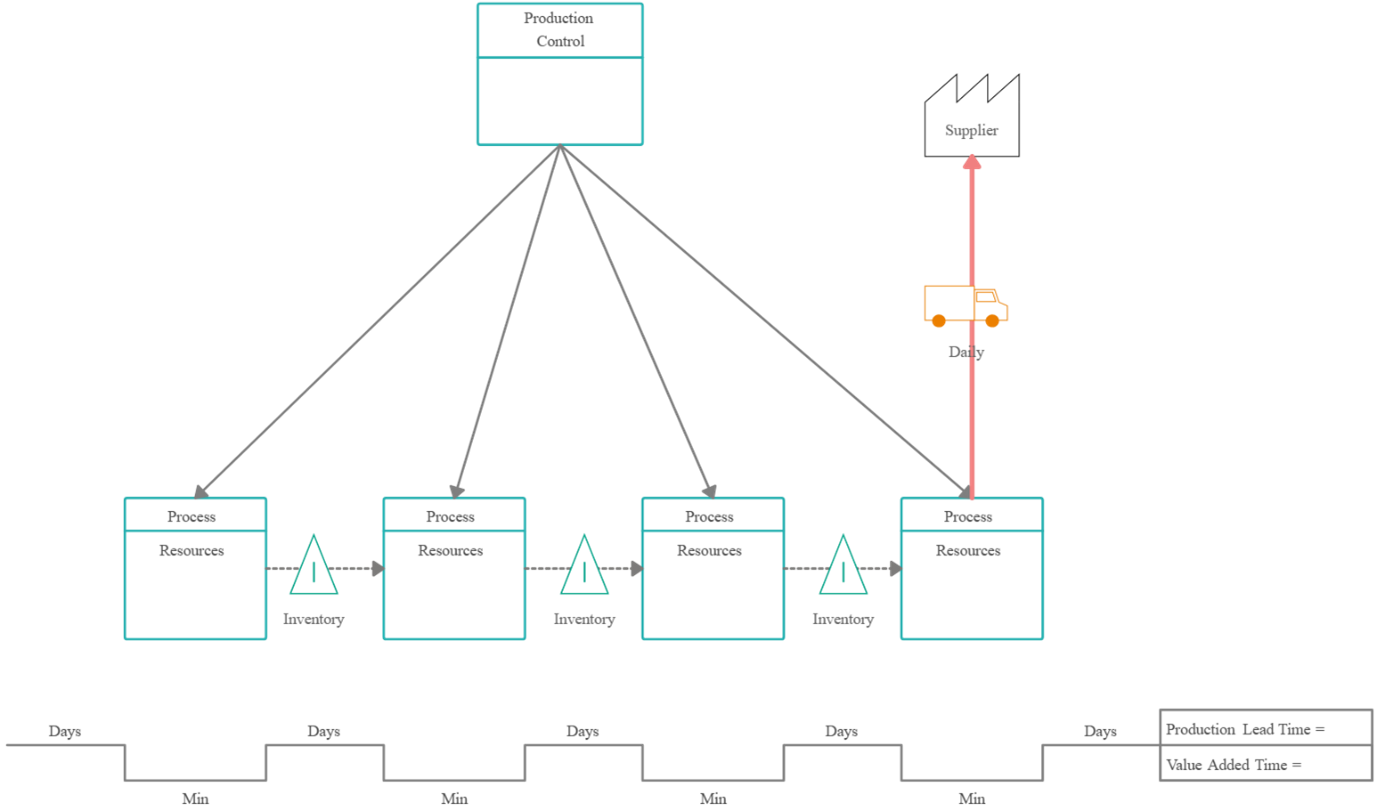
Image Credits: “Value Stream Map template”, accessed via Creately.com
Value Stream Mapping (VSM) is a visual tool used in lean manufacturing to analyze and design the flow of materials and information required to bring a product or service to a customer. It helps identify and eliminate waste by mapping out each step in a process, from raw materials to finished goods. By visualizing the entire process, VSM highlights inefficiencies, delays, and bottlenecks.
Warehouse layout design methods

AutoCAD
Warehouse layout design methods aim to optimize storage and workflow efficiency. A fixed layout assigns specific locations for products, ensuring easy access. Random storage places items in any available space, maximizing flexibility and space utilization. Zone layout divides the warehouse into sections based on product types or picking methods, enhancing organization. Flow-through layout arranges the warehouse so goods move in one direction from receiving to shipping, minimizing backtracking and congestion. Cross-docking transfers products directly from incoming to outgoing trucks, reducing storage time.
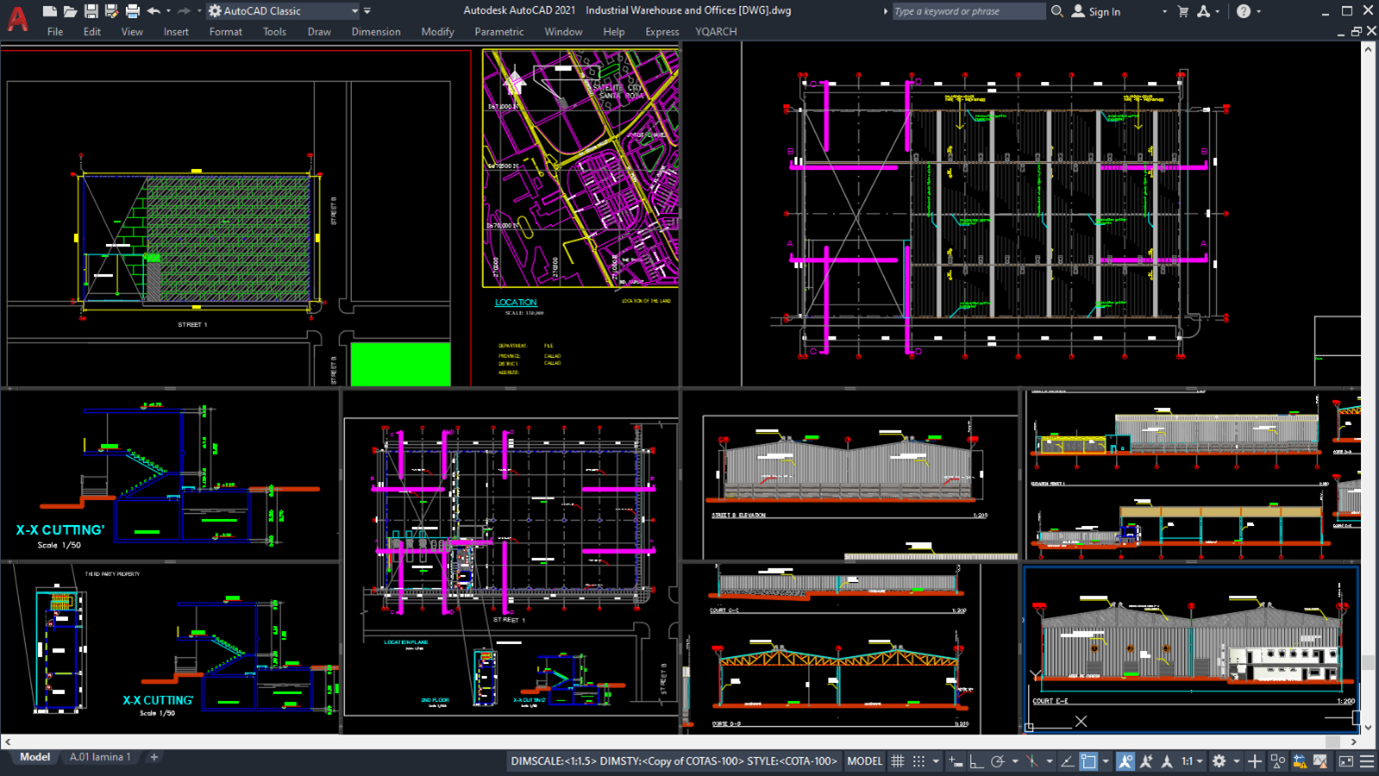
Image Credits: “Industrial Warehouse and Offices”, accessed via Free CAD files
AutoCAD offers precise 2D and 3D modelling, enabling efficient warehouse design with accurate layouts and optimized space utilization. Its automation features streamline repetitive tasks, saving time and ensuring consistency. AutoCAD’s 3D visualization helps stakeholders understand the design, while simulation tools allow for planning traffic flow and material handling. The software supports collaboration, integrates with other tools, and ensures compliance with industry standards.
Strategy & Business Transformation: Business Strategy; Transformation & Turnaround; Organizational Design; Industrial Real Estate Strategy; Reshoring, Friendshoring, Nearshoring vs. Offshoring; Innovation & New Business Models; Open Innovation & Ecosystem Collaboration * Mergers & Acquisitions (M&A): Delivering Deal Value Operationally; Post-Merger Operations Integration; Post-Merger Operational Footprint Rationalization; Capturing Post-Closure Synergies * Value Chain Operations Excellence: Smart Manufacturing (Smart Plant); World Class Manufacturing (WCM); Construction & Real Estate Operations; Efficient Supply Chains; Sourcing & Procurement Optimization; In-Country Value (ICV) Programs; Network Design Optimization; Factory Layout & Warehouse Design; Sales & Operations Planning (S&OP); Integrated Business Planning (IBP); Logistics & Intermodal Transportation; Distribution Strategy; Inventory Balancing & Safety Stock; Make vs. Buy Decisions; Order-to-Cash Process Optimization; Last-Mile Delivery Optimization; Mass Customization & Configure-to-Order * Process, Cost & Performance Improvement: Lean Six Sigma; Value Stream Mapping (VSM); Continuous Improvement Programs; Zero Waste Initiatives; Process / Operational / Business Excellence; Shared Service Centres (SSC) & Centres of Excellence (CoE); Cost Reduction Programs; Activity-Based Costing; Zero-Based Budgeting; Industrial Asset Management (IAM); Industrial Engineering; Workforce Productivity Analytics * Digital, Data & Industry X.0 Innovation: Digital Technologies for Operations; Industry 4.0 Roadmaps; Automation & Smart Factory Enablement; Predictive & Prescriptive Analytics; Digital Twins for Operations & Network Optimization; AI/ML in Forecasting & Demand Planning; Real-Time KPI Dashboards & Control Towers * Sustainability, ESG & Resource Management: Sustainability Strategy & ESG Integration; Circularity & Recycling; Remanufacturing; Operations Decarbonization; Extended Producer Responsibility (EPR) Programs; Supply Chain Due Diligence; Scope 3 Emissions Reduction; Net Zero Roadmap; Industrial Energy Audits & Optimization; Water Stewardship & Resource Recovery; Product Stewardship Compliance; Triple Bottom Line Performance * Resilience, Risk & Compliance: Supply Chain Risk Assessment & Mitigation; Scenario Planning & Stress Testing; Business Continuity & Disaster Recovery; Supplier Diversification Strategies; Global Trade Compliance & Tariffs/Customs Optimization; Supply Chain Assurance; Supply Chain Audit * People, Process & Culture Enablement: Leadership Alignment for Operational Change; Continuous Improvement Mindset; Cross-Functional Collaboration Enablement; Cultural Transformation for Excellence; Training & Lean Digital Skills Uplift for Industry 4.0; Workforce Safety, Wellbeing & Ergonomics; Change Management Playbooks * Global Value Chain * Operations Excellence * Manufacturing Excellence * Supply Chain Excellence * Procurement Excellence * Industrial Excellence * Operations Transformation * Manufacturing Transformation * Supply Chain Transformation * Procurement Transformation * Industrial Transformation * Sustainability Transformation * Digital Transformation * Spend Management * Sourcing * Procurement * Tariffs & Customs Optimization * International Trade * Network Design * Construction * Real Estate * Industry 4.0 * Digital Technologies * Lean * Six Sigma * Kaizen * Theory of Constraints * Third-Party Risk * Supply Chain Risk Management * Sustainability * ESG * Scope 3 * Scope 4 * Scope 5 * GHG Emissions * Carbon Footprint * Value Chain Emissions Reduction * Circular Economy * Circular Supply Chain * Recycling * Decarbonization * Net Zero * Sustainable Supply Chain Management * Sustainable Manufacturing * Responsible Sourcing * Sustainable Procurement * Operational Sustainability * Extended Producer Responsibility (EPR) * Carbon Border Adjustment Mechanism (CBAM) * Sustainability Consulting * Supply Chain Consulting * Manufacturing Consulting * Procurement Consulting * Industrial Management Consulting * Value Chain Consulting * Operations Consulting * Lean Six Sigma Consulting * Triple Bottom Line * Original Equipment Manufacturer (OEM) * Industrial Engineering * Logistics * Transportation * Warehousing * Distribution * Smart Factory * Digital Factory * Digital Twin * Profitable Transformation & Turnaround * Performance Improvement * Cost Reduction * EBITDA Improvement * Inventory Optimization * S&OP * IBP * Private Equity Operating Partner * M&A * Operational Due Diligence * Post-Merger Integration * Industrial Footprint Rationalization * Post-Closure Synergies * Delivering Deal Value * Operations Strategy * Supply Chain Strategy * Manufacturing Strategy * Procurement Strategy * Industrial Strategy * Value Chain Strategy * Sustainability Strategy * Operating Model * Diagnostics * Analysis * Solutions * Innovation * Continuous Improvement * Risk * Resilience * Efficiency * Productivity * Supply Chain Assurance * Supply Chain Audit * Supply Chain Due Diligence * Supply Chain Design & Implementation * Supply Chain Development * Supply Chain Optimisation * Operating Footprint Optimisation * Value Chain Optimisation * Organizational Design & Restructuring * Business Process Reengineering * Process Redesign * Process Improvement * Business Excellence * Performance Improvement * Agile Program & Project Management * Value Chain Excellence * Centre of Excellence (CoE) * Value Chain Excellence Consulting * Operations Excellence Consulting * Manufacturing & Supply Chain Solutions * Management Consulting * Business Advisory * Change Management * Business Transformation * Leadership Coach * Expert * Consultant * Global Advisor * Worldwide Partner * Mahesh S. Multani * Sustainable Lean Operating System * manufacturing & supplychain management excellence * msm excellence *
Global Value Chain * Operations Excellence * Manufacturing Excellence * Supply Chain Excellence * Procurement Excellence * Industrial Excellence * Operations Transformation * Manufacturing Transformation * Supply Chain Transformation * Procurement Transformation * Industrial Transformation * Sustainability Transformation * Digital Transformation * Spend Management * Sourcing * Procurement * Tariffs & Customs Optimization * International Trade * Network Design * Construction * Real Estate * Industry 4.0 * Digital Technologies * Lean * Six Sigma * Kaizen * Theory of Constraints * Third-Party Risk * Supply Chain Risk Management * Sustainability * ESG * Scope 3 * Scope 4 * Scope 5 * GHG Emissions * Carbon Footprint * Value Chain Emissions Reduction * Circular Economy * Circular Supply Chain * Recycling * Decarbonization * Net Zero * Sustainable Supply Chain Management * Sustainable Manufacturing * Responsible Sourcing * Sustainable Procurement * Operational Sustainability * Extended Producer Responsibility (EPR) * Carbon Border Adjustment Mechanism (CBAM) * Sustainability Consulting * Supply Chain Consulting * Manufacturing Consulting * Procurement Consulting * Industrial Management Consulting * Value Chain Consulting * Operations Consulting * Lean Six Sigma Consulting * Triple Bottom Line * Original Equipment Manufacturer (OEM) * Industrial Engineering * Logistics * Transportation * Warehousing * Distribution * Smart Factory * Digital Factory * Digital Twin * Profitable Transformation & Turnaround * Performance Improvement * Cost Reduction * EBITDA Improvement * Inventory Optimization * S&OP * IBP * Private Equity Operating Partner * M&A * Operational Due Diligence * Post-Merger Integration * Industrial Footprint Rationalization * Post-Closure Synergies * Delivering Deal Value * Operations Strategy * Supply Chain Strategy * Manufacturing Strategy * Procurement Strategy * Industrial Strategy * Value Chain Strategy * Sustainability Strategy * Operating Model * Diagnostics * Analysis * Solutions * Innovation * Continuous Improvement * Risk * Resilience * Efficiency * Productivity * Supply Chain Assurance * Supply Chain Audit * Supply Chain Due Diligence * Supply Chain Design & Implementation * Supply Chain Development * Supply Chain Optimisation * Operating Footprint Optimisation * Value Chain Optimisation * Organizational Design & Restructuring * Business Process Reengineering * Process Redesign * Process Improvement * Business Excellence * Performance Improvement * Agile Program & Project Management * Value Chain Excellence * Centre of Excellence (CoE) * Value Chain Excellence Consulting * Operations Excellence Consulting * Manufacturing & Supply Chain Solutions * Management Consulting * Business Advisory * Change Management * Business Transformation * Leadership Coach * Expert * Consultant * Global Advisor * Worldwide Partner * Mahesh S. Multani * Sustainable Lean Operating System * manufacturing & supplychain management excellence * msm excellence * Strategy & Business Transformation: Business Strategy; Transformation & Turnaround; Organizational Design; Industrial Real Estate Strategy; Reshoring, Friendshoring, Nearshoring vs. Offshoring; Innovation & New Business Models; Open Innovation & Ecosystem Collaboration * Mergers & Acquisitions (M&A): Delivering Deal Value Operationally; Post-Merger Operations Integration; Post-Merger Operational Footprint Rationalization; Capturing Post-Closure Synergies * Value Chain Operations Excellence: Smart Manufacturing (Smart Plant); World Class Manufacturing (WCM); Construction & Real Estate Operations; Efficient Supply Chains; Sourcing & Procurement Optimization; In-Country Value (ICV) Programs; Network Design Optimization; Factory Layout & Warehouse Design; Sales & Operations Planning (S&OP); Integrated Business Planning (IBP); Logistics & Intermodal Transportation; Distribution Strategy; Inventory Balancing & Safety Stock; Make vs. Buy Decisions; Order-to-Cash Process Optimization; Last-Mile Delivery Optimization; Mass Customization & Configure-to-Order * Process, Cost & Performance Improvement: Lean Six Sigma; Value Stream Mapping (VSM); Continuous Improvement Programs; Zero Waste Initiatives; Process / Operational / Business Excellence; Shared Service Centres (SSC) & Centres of Excellence (CoE); Cost Reduction Programs; Activity-Based Costing; Zero-Based Budgeting; Industrial Asset Management (IAM); Industrial Engineering; Workforce Productivity Analytics * Digital, Data & Industry X.0 Innovation: Digital Technologies for Operations; Industry 4.0 Roadmaps; Automation & Smart Factory Enablement; Predictive & Prescriptive Analytics; Digital Twins for Operations & Network Optimization; AI/ML in Forecasting & Demand Planning; Real-Time KPI Dashboards & Control Towers * Sustainability, ESG & Resource Management: Sustainability Strategy & ESG Integration; Circularity & Recycling; Remanufacturing; Operations Decarbonization; Extended Producer Responsibility (EPR) Programs; Supply Chain Due Diligence; Scope 3 Emissions Reduction; Net Zero Roadmap; Industrial Energy Audits & Optimization; Water Stewardship & Resource Recovery; Product Stewardship Compliance; Triple Bottom Line Performance * Resilience, Risk & Compliance: Supply Chain Risk Assessment & Mitigation; Scenario Planning & Stress Testing; Business Continuity & Disaster Recovery; Supplier Diversification Strategies; Global Trade Compliance & Tariffs/Customs Optimization; Supply Chain Assurance; Supply Chain Audit * People, Process & Culture Enablement: Leadership Alignment for Operational Change; Continuous Improvement Mindset; Cross-Functional Collaboration Enablement; Cultural Transformation for Excellence; Training & Lean Digital Skills Uplift for Industry 4.0; Workforce Safety, Wellbeing & Ergonomics; Change Management Playbooks *
IN PURSUIT OF GLOBAL VALUE CHAIN EXCELLENCE
Make your next step an excellent one...
